English composers Herbert Howells (1892–1983), Stanley Bate (1911–1959) and Edwin York Bowen (1884–1961) offer a wealth of divergent influences illuminating the cultural shifts of the early twentieth century. Their choral, instrumental and orchestral music is well recorded, but their songs less so. This album reveals them to be fine song composers too and includes also one song by Edwin York Bowen’s song Philip. Except for Howells’s Peacock Pie, all the music here is released for the first time.
Timothy Salter writes:
‘I am fortunate to have known two of the three composers represented in this collection of songs.
My first piano teacher arranged for me, aged about 16, to play to York Bowen. Following a first meeting I had piano lessons with him for a sadly brief time until his death in 1961.
My memory of him is of a friendly and quite modest figure; by the time I met him his music had been out of fashion for many years. I sensed that our relationship, although of short duration, had a sympathetic quality lent to it by the fact that I too am a composer as well as a pianist. I recall showing him one of my compositions; his response included a remark that I might have difficulty in publishing it these days in the face of the current cultural climate of modernism, hard-edged and experimental as so much of it was.
York Bowen’s own music is in a rich harmonic language characterized by an overtly sensual appeal, and in his teaching, he demonstrated this sensibility too. He once told me with great enthusiasm of a recital to which he’d been recently, given by Walter Gieseking - another pianist-composer - who had played some music of Debussy. Bowen had been enraptured by Gieseking’s limpid playing of a descending cascade of notes, saying it was as if he’d shaken the notes out of his sleeve. It’s an image that has stayed with me.
My acquaintance with Howells was more tangential. I recall an early encounter: he was examining a cellist for whose performance I was playing the piano part, and he remarked on the piano playing with generosity. He and I both taught at the Royal College of Music, London; our times overlapped by a few years. The subjects we taught were composition and what used to be called harmony and counterpoint (later amended to ‘musicianship’ - more elegant but less informative). Not long after I started to stand in at RCM for absent professors, I was called upon to deputise for him; he had attempted to board a No. 9 bus and fallen, breaking his hip. Thus, I met all his students but my contact with Howells was mostly a matter of amiable exchanges in the corridor thereafter.
It’s tempting to consider the coinciding of composer and keyboard player. Its immediate evidence is in the fluency of the keyboard writing throughout this recording; the musical language, of course, remains individual to each composer.’ T.S.
Five Songs for Low Voice and Piano, Op. 7a *
1. The Valley of Silence
2. When the dew is falling
3. By the Grey Stone
4. St. Bride’s Song
5. When there is Peace
Peacock Pie, Op. 33
6. Tired Tim
7. Alas, Alack!
8. Mrs. MacQueen
9. The Dunce
10. Full Moon
11. Miss T.
Stanley Bate (1911-1959)
ive Songs from Pomes Penyeach, Op. 53 *
12. Simples (No. 10)
13. Tutto è Sciolto (No. 8)
14. Watching the Needleboats at San Sabba (No. 4)
15. Bahnhofstrasse (No. 11)
16. Tilly (No. 1)
Edwin York Bowen (1884-1961) *
17. Cordovan Love Song, Op. 68 No. 4
18. To Myra
19. In June, Op. 68 No. 3
20. Storm Song, Op. 68 No. 1
21. The Hidden Treasure, Op. 67 No. 1
22. A Moonlight Night
23. Love's Reckoning, Op. 67 No. 3
24. Sleep: A Song Triptych (by Philip York Bowen, 1913-1970)
25. If You Should Frown, Op. 68 No. 2
26. Love and Death, Op. 62 No. 2
27. The Wind's an Old Woman, Op. 71 No. 1
World première recordings *
Howell’s Five Songs for Low Voice and Piano date from 1916, when he was beginning to get the first professional performances in London after his studies in London at the Royal College of Music, where he had been hailed by Sir Hubert Parry, the director, at his audition as ‘an amazingly gifted boy’. Unlike his contemporaries Butterworth, Bliss and Gurney, serious illness spared Howells from serving in World War One: instead, he endured years of experimental and ultimately successful radiological treatment for Graves Disease, enabling him to continue to compose.
The Five Songs explore musical language reminiscent of late Wagner or Hugo Wolf’s Lieder in their complex harmonies and expressive intensity. Howells designated the Songs as Op. 7: he applied the same number to his Three Dances for Violin from 1915 and appears to have neglected if not suppressed the songs. While Howells never explained why he did this, like many of his contemporaries, he was searching for new musical styles unburdened by the late Romanticism embodied in the works of established composers such as Stanford, Parry and Elgar. In 1916, Howells expressed in The Athenaeum his opinion about the superfluous nature of musical settings of highly lyrical poetry. The words for these songs are by ‘Fiona Macleod’, a pseudonym for William Sharp (1855-1905).
Howells’s setting of six poems from Walter de la Mare’s Peacock Pie (1922) contrast strikingly with Op. 7a. The verses are addressed to children: the music has a direct simplicity, although the fifth song, Full Moon, reveals the lyricism found throughout his music.
* ‘English Singing’, The Athenaeum (July 1916), pp. 351-52.
Stanley Bate had a successful career as composer and pianist in America and Britain, although his work is little heard today. His strongest influences were Delius and near-contemporary European composers Ravel and Hindemith: he studied at the Royal College of Music with Ralph Vaughan Williams, Arthur Benjamin, Gordon Jacob and with Hindemith in Berlin. These five songs were published by Ricordi in 1951 from a set of thirteen composed in autumn 1946 setting words from James Joyce’s Pomes Penyeach. The fourth, Bahnhofstrasse, with its mechanistic piano figure, is far from the Romantic language of early Howells and Bowen. The poem’s reference to colours relates to Joyce’s own difficulties with vision.
On publication, the critic Harry Dexter praised these five songs for their ‘clarity of texture, sincerity of expression, general sense of purpose and their emotional substance which make for ready understanding and should be taken up by all singers of serious intentions.’ They were first performed by John Cameron and Frederick Stone on 20 October 1952. In the same year, Bate created a version of the songs for voice and orchestra.
Edwin York Bowen was hailed by Camille Saint-Saëns as ‘the most remarkable of the young British composers’ and a distinguished pianist. During recent decades his piano music has become widely performed along with some of his chamber music. Most of his other works including the songs have remained largely unknown.
Bowen’s instrumental music’s subtle chromatic harmonic palette and predominantly melodic language display a late Romantic sensibility; the harmonic language of his songs is more direct, manifesting a keen response to their texts. They were published during the 1920s, except for Sleep (1937), which the score’s title page attributes to Bowen’s son Philip.
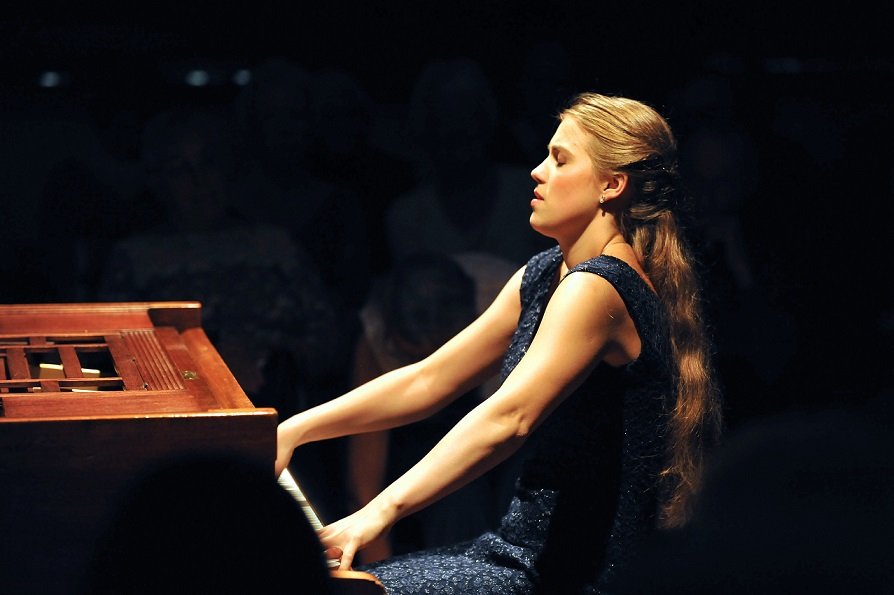
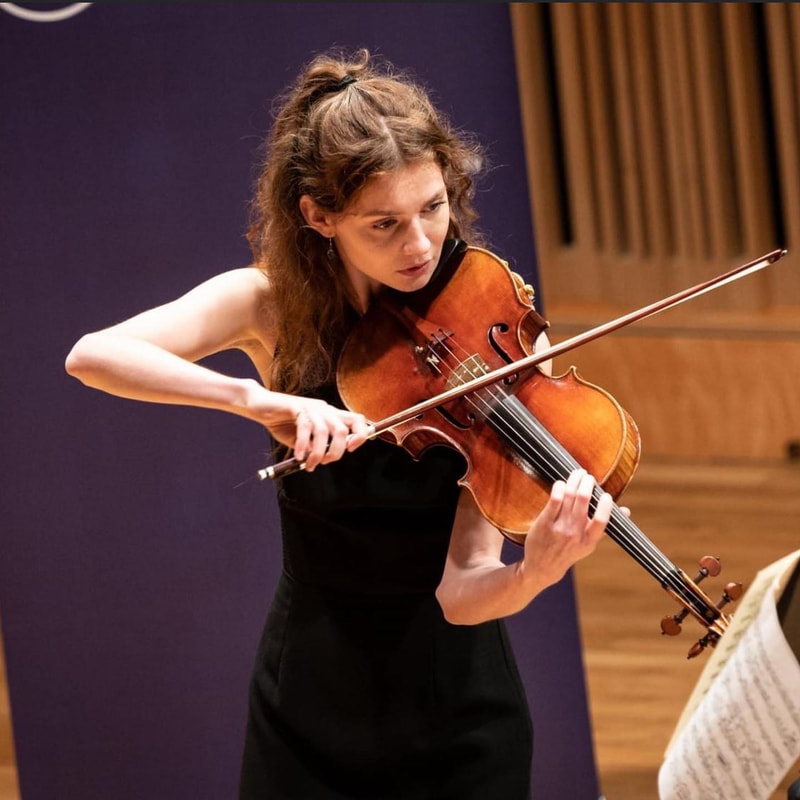
Emily Gray and Timothy Salter formed their musical partnership in 2017, initially with the aim of recording some of Timothy Salter’s songs. They have performed, recorded and broadcast a wide variety of music and sought out much unjustly neglected repertoire, including this album, exploring the little-known songs of three outstanding English composers.
Digital editing and mastering: David Wright
Artwork design: Hannah Whale - Fruition Creative Concepts
Record label and distribution: Ulysses Arts Ltd.