Ulysses Arts
  • Home
  • About
  • What We Do
    • Label Services
    • Due Diligence
    • Digital Distribution >
      • Highlands&Sea
    • Press and Public Relations >
      • Vibrant Rhythms
    • Digital Marketing
    • Artistic Programming >
      • Adalar Istanbul Concert 2020
      • Büyükada Ensemble String Quartet Concert 16 July 2022
      • Darkness illuminated
      • Adalar Istanbul Concert 2019
    • Concert Venue Strategy
  • Clients
  • Contact
  • UA Press Centre
  • Playlists
  • Ulysses Arts on Spotify
  • Ulysses Arts on Idagio

MONTEIRO CHORAL MUSIC ALBUM RELEASED BY ULYSSES ARTS ON 28 AUGUST 2026

31/5/2026

0 Comments

 
Ulysses Arts releases J A Monteiro Choral Music on 28 August 2026, with the Happenstance Singers conducted by Matthew Swann (UA260071). The album will include Monteiro's Limehouse Mass, And Ruth Said, Away in A Manger, and music from Seven Last Words.
Picture
Click above to pre-order on iTunes with digital booklet
Monteiro: Choral Music brings together a selection of sacred works by J A Monteiro. Rooted in the traditions of Anglican and Catholic choral music, these settings balance expressive harmonic writing with the practical demands of liturgical performance.

At the centre of the programme are selected movements from Seven Last Words, a setting of the final words of Christ on the cross. Each movement illuminates a different emotional character, from the tender compassion of Woman, behold your son, through the anguish of My God, why have you forsaken me?, to the sorrow of It is finished.

The album also includes the Limehouse Mass, written for the Church of Our Lady Immaculate & St Frederick, London: a compact setting for practical liturgical use. And Ruth said unfolds in long lyrical lines, while Away in a manger offers a gentle reimagining of the familiar carol.

Pre-order Monteiro: Choral Music from Qobuz

Picture
Joe Monteiro, who publishes as J.A. Monteiro, is a composer and arranger of choral music. His works have been recorded by the Ulysses Arts label. Two initial EPs, Limehouse Mass (2025) and Seven Last Words (2026), were released in preparation for this full album. Choral works include motets, Mass and psalm settings, and arrangements of hymns and carols. His organ work Ye Choirs of New Jerusalem was performed at Southwark Cathedral in 2024 and subsequently recorded.

He is Director of Music at the Church of Our Lady Immaculate & St Frederick, London. He graduated from the University of Oxford, where he wrote for the chapel choir of St Hugh’s College.


Picture
Happenstance Singers were formed in 2020 by their director, Matthew Swann, and a few like-minded friends who were seeking a high-quality choir in London with a distinctive warmth of tone, across a wide range of choral repertoire. They have performed a range of projects including Bach’s St John Passion, rarely-performed Flemish 16th-century polyphony including Richafort’s Requiem in Memoriam Josquin de Prez, contemporary classics including Eric Whitacre’s When David Heard and their highly popular Handel’s Messiah at the Kernel Brewery Tap Room. They also sing regularly for services at Westminster Abbey.


Pre-order, download and streaming links will be published here.

Electronic press kit for reviewers and radio producers available from Ulysses Arts.

0 Comments

HOWELLS, BATE AND BOWEN SONGS: WORLD PREMIÈRE ALBUM RELEASED BY ULYSSES ARTS ON 25 SEPTEMBER 2026 WITH EMILY GRAY AND TIMOTHY SALTER

30/5/2026

0 Comments

 
Ulysses Arts releases world première recordings of English songs by Herbert Howells, Stanley Bate and Edwin York Bowen on 25 September 2026, with Emily Gray, mezzo-soprano and Timothy Salter, piano (UA260080).
Picture
Click above to pre-order from iTunes with digital booklet

English composers Herbert Howells (1892–1983), Stanley Bate (1911–1959) and Edwin York Bowen (1884–1961) offer a wealth of divergent influences illuminating the cultural shifts of the early twentieth century. Their choral, instrumental and orchestral music is well recorded, but their songs less so. This album reveals them to be fine song composers too and includes also one song by Edwin York Bowen’s song Philip. Except for Howells’s Peacock Pie, all the music here is released for the first time.

Timothy Salter writes:

‘I am fortunate to have known two of the three composers represented in this collection of songs. 

My first piano teacher arranged for me, aged about 16, to play to York Bowen. Following a first meeting I had piano lessons with him for a sadly brief time until his death in 1961. My memory of him is of a friendly and quite modest figure; by the time I met him his music had been out of fashion for many years. I sensed that our relationship, although of short duration, had a sympathetic quality lent to it by the fact that I too am a composer as well as a pianist. I recall showing him one of my compositions; his response included a remark that I might have difficulty in publishing it these days in the face of the current cultural climate of modernism, hard-edged and experimental as so much of it was.

York Bowen’s own music is in a rich harmonic language characterised by an overtly sensual appeal, and in his teaching, he demonstrated this sensibility too. He once told me with great enthusiasm of a recital to which he’d been recently, given by Walter Gieseking - another pianist-composer - who had played some music of Debussy. Bowen had been enraptured by Gieseking’s limpid playing of a descending cascade of notes, saying it was as if he’d shaken the notes out of his sleeve.  It’s an image that has stayed with me.  

My acquaintance with Howells was more tangential. I recall an early encounter: he was examining a cellist for whose performance I was playing the piano part, and he remarked on the piano playing with generosity. He and I both taught at the Royal College of Music, London; our times overlapped by a few years.  The subjects we taught were composition and what used to be called harmony and counterpoint (later amended to ‘musicianship’ - more elegant but less informative).  Not long after I started to stand in at RCM for absent professors, I was called upon to deputise for him; he had attempted to board a No. 9 bus and fallen, breaking his leg. Thus, I met all his students but my contact with Howells was mostly a matter of amiable exchanges in the corridor thereafter.  

It’s tempting to consider the coinciding of composer and keyboard player.  Its immediate evidence is in the fluency of the keyboard writing throughout this recording; the musical language, of course, remains individual to each composer.’  T.S.
   
Herbert Howells (1892-1983)

Five Songs for Low Voice and Piano, Op. 7a *

1. The Valley of Silence
2. When the dew is falling
3. By the Grey Stone
4. St. Bride’s Song
5. When there is Peace

Peacock Pie, Op. 33

6. Tired Tim
7. Alas, Alack!
8. Mrs. MacQueen
9. The Dunce
10. Full Moon
11. Miss T. 

Stanley Bate (1911-1959)

Five Songs from Pomes Penyeach, Op. 53 *

12. Simples (No. 10)
13. Tutto è Sciolto (No. 8)
14. Watching the Needleboats at San Sabba (No. 4)
15. Bahnhofstrasse (No. 11)
16. Tilly (No. 1)

Edwin York Bowen (1884-1961) *

17. Cordovan Love Song, Op. 68 No. 4
18. To Myra
19. In June, Op. 68 No. 3
20. Storm Song, Op. 68 No. 1
21. The Hidden Treasure, Op. 67 No. 1
22. A Moonlight Night
23. Love's Reckoning, Op. 67 No. 3
24. Sleep: A Song Triptych (attributed to Philip York Bowen, 1913-1970)
25. If You Should Frown, Op. 68 No. 2
26. Love and Death, Op. 62 No. 2
27. The Wind's an Old Woman, Op. 71 No. 1

World première recordings *

Picture
Herbert Howells (1892-1983), Five Songs for Low Voice and Piano Op. 7a and Peacock Pie, Op. 33
 
Howell’s Five Songs for Low Voice and Piano date from 1916, when he was beginning to get the first professional performances in London after his studies in London at the Royal College of Music, where he had been hailed by Sir Hubert Parry, the director, at his audition as ‘an amazingly gifted boy’. Unlike his contemporaries Butterworth, Bliss and Gurney, serious illness spared Howells from serving in World War One: instead, he endured years of experimental and ultimately successful radiological treatment for Graves Disease, enabling him to continue to compose.

The Five Songs explore musical language reminiscent of late Wagner or Hugo Wolf’s Lieder in their complex harmonies and expressive intensity. Howells designated the Songs as Op. 7: he applied the same number to his Three Dances for Violin from 1915 and appears to have neglected if not suppressed the songs. While Howells never explained why he did this, like many of his contemporaries, he was searching for new musical styles unburdened by the late Romanticism embodied in the works of established composers such as Stanford, Parry and Elgar. In 1916, Howells expressed in The Athenaeum his opinion about the superfluous nature of musical settings of highly lyrical poetry. The words for these songs are by ‘Fiona Macleod’, a pseudonym for William Sharp (1855-1905).
 
Howells’s setting of six poems from Walter de la Mare’s Peacock Pie (1922) contrast strikingly with Op. 7a. The verses are addressed to children: the music has a direct simplicity, although the fifth song, Full Moon, reveals the lyricism found throughout his music.

* ‘English Singing’, The Athenaeum (July 1916), pp. 351-52.

Picture
Stanley Bate (1911-1959), Five Songs from Pomes Penyeach, Op. 53

Stanley Bate had a successful career as composer and pianist in America and Britain, although his work is little heard today. His strongest influences were Delius and near-contemporary European composers Ravel and Hindemith: he studied at the Royal College of Music with Ralph Vaughan Williams, Arthur Benjamin, Gordon Jacob and with Hindemith in Berlin. These five songs were published by Ricordi in 1951 from a set of thirteen composed in autumn 1946 setting words from James Joyce’s Pomes Penyeach. The fourth, Bahnhofstrasse, with its mechanistic piano figure, is far from the Romantic language of early Howells and Bowen. The poem’s reference to colours relates to Joyce’s own difficulties with vision.

On publication, the critic Harry Dexter praised these five songs for their ‘clarity of texture, sincerity of expression, general sense of purpose and their emotional substance which make for ready understanding and should be taken up by all singers of serious intentions.’ They were first performed by John Cameron and Frederick Stone on 20 October 1952. In the same year, Bate created a version of the songs for voice and orchestra.

Picture
Edwin York Bowen (1884-1961)

Edwin York Bowen was hailed by Camille Saint-Saëns as ‘the most remarkable of the young British composers’ and a distinguished pianist. During recent decades his piano music has become widely performed along with some of his chamber music. Most of his other works including the songs have remained largely unknown. 

Bowen’s instrumental music’s subtle chromatic harmonic palette and predominantly melodic language display a late Romantic sensibility; the harmonic language of his songs is more direct, manifesting a keen response to their texts.  They were published during the 1920s, except for Sleep (1937), which the score’s title page attributes to Bowen’s son Philip.

Picture
Emily Gray is a mezzo-soprano who specialises in English Song. She has recorded several albums since 2000, working with Naxos, Ulysses Arts, Convivium, Divine Arts Recordings Group and Chandos Movies. She won the BBC Radio 2 Choir Girl of the Year 2000 and was nominated for two Classical Brit Awards the following year. Emily works internationally in operas and oratorio, described in Opera Now as a ‘versatile, powerful mezzo who is magnetic on stage’.


Picture
Timothy Salter is a composer, conductor and pianist.  As a pianist, he studied in his youth with Edwin York Bowen; he has performed in the UK and overseas, working with singers and instrumentalists. As a composer his output includes choral music, solo vocal music, instrumental (solo and ensemble) and orchestral music. Much of his wide-ranging instrumental music has been written for colleague performers.  He is Musical Director of The Ionian Singers. For many years he taught both composition and performance studies at the Royal College of Music, London, including deputising for Herbert Howells.

Emily Gray and Timothy Salter formed their musical partnership in 2017, initially with the aim of recording some of Timothy Salter’s songs. They have performed, recorded and broadcast a wide variety of music and sought out much unjustly neglected repertoire, including this album, exploring the little-known songs of three outstanding English composers.

Engineering and production: Frank Morgan for Usk Recordings
Digital editing and mastering: David Wright
Artwork design: Hannah Whale - Fruition Creative Concepts
Record label and distribution: Ulysses Arts Ltd.

Pre-order now:
iTunes 
Qobuz

Download and streaming links will be published here.


Electronic press kit for reviewers and radio producers available from Ulysses Arts.

0 Comments

NICHOLAS SIMPSON, FLOURISH - WORLD PREMIÈRE ALBUM RELEASE WITH MANCHESTER CAMERATA AND CAROLINE PETHER ON 18 SEPTEMBER 2026

28/5/2026

0 Comments

 
Ulysses Arts releases Flourish, British composer Nicholas Simpson's album of orchestral world première recordings, on 18 September 2026, with Manchester Camerata conducted by the composer (UA260010). The Violin Concerto, performed by soloist Caroline Pether, is inspired by Scottish bagpiping and fiddle traditions; Absence of Clouds is a Cumbrian Lake District 'Four Seasons'; Flourish is an orchestral showpiece of energy and optimism.
Picture
Click above to pre-order with digital booklet from iTunes

Pre-order from QOBUZ

More download and streaming links will be published here on release day.


Picture
Nicholas Simpson writes: 'All of Flourish's music has personal connections. The Violin Concerto is written in honour of my late father, who played the bagpipes; his pipe band was one of my earliest musical experiences and I admire Scottish traditional music, particularly fiddle players like John McCusker and Hamish McAndrew. The second movemeent celebrates my father's life, with echoes of 20th century Hibernian favourites like Jimmy Shand and Kenneth McKellar.

Absence of Clouds is a tribute to England's Lake District: it started with a conversation one sunny afternoon c. 2011 in Newfield Inn, Seathwaite, after rehearsing Wagner's Siegfried Idyll. The pun with Seathwaite was too good to lose, and the idea for this Cumbrian 'Four Seasons' was born. It was composed mainly in a remote farm cottage in the Lake District: no one who has seen the working outdoor life in all temperatures and weathers can retain the image of the area as merely a Wordsworthian beauty spot. Flourish started life as a flute and harp duo commissioned by two friends starting their careers, then orchestrated.

The Violin Concerto, first performed by Rachel Stonham and the Athenean Ensemble in Manchester in 2024, has two movements which reflect the division in Scottish traditional music between Ceòl Mor (Gaelic, meaning “big music”) and Ceòl Beg (“little music”). Simpson's Ceòl Mor is an outpouring of loss, the anguish of the opening giving way to a funeral march, succeeded by a numb and listless central section. Only after the cadenza does the soloist express acceptance and tranquillity. The second movement, Ceòl Beg, is a loosely formed “set” of dance-variations in a plain and energetic style, increasing in speed, with slow and quick marches, waltz, strathspey, jig and reel.

Absence of Clouds's four movements pass from Seathwaite in summer to Pengennet Woods, Autumn – rustling leaves and brutal winds. Duddon Sands, Winter evokes the estuary – the river coming down in lumps, and wading birds calling as the tide advances. Finally, spring comes high on Birker Fell - sunshine and warmth are mixed bracingly with April storms and hail.

Flourish evokes the burgeoning energy and optimism of its original young performers t,ranscribed into an orchestral showpiece, first performed in this form by Manchester Beethoven Society Orchestra in 2011.'


Picture

Nicholas Simpson (composer and conductor) was born in Manchester. For ten years he played guitar in rock bands before studying with John Tavener at London's Trinity College of Music, where he won the Chappell Prize for composition and the Ricordi Prize for conducting (twice). His music has been played in Europe and USA, including three symphonies, piano and violin concertos, chamber music, an oratorio and Quarantine, an opera based on Jim Crace’s 1995 Booker-shortlisted novel of the same name. 

Recent projects include Fastness, Manchester Camerata’s album of his chamber orchestra music, and Ladder to the Stars, his second solo album as a singer/songwriter.

Simpson has conducted many orchestras across north-west England. He is associate conductor of the Huddersfield Philharmonic and co-founder of the Athenean Ensemble in Manchester. He is a member of the band Eminent Hipsters, whose debut album releases in 2026.


Electronic press kit for reviewers and radio producers available from Ulysses Arts.

0 Comments

PAUL HENLEY PIANO WORKS VOLUME 2 WITH PAVEL TIMOFEYEVSKY RELEASED BY ULYSSES ARTS ON 29 MAY 2026

11/2/2026

0 Comments

 
Ulysses Arts releases Paul Henley Piano Works Volume 2, performed by Pavel Timofeyevsky, on 29 May 2026, in partnership with Bridges Music (UA260050).
Picture
Click image above download from iTunes with digital booklet or stream on Apple Music
Christopher Kettle writes:

'Henley's Sonata No. 4 is a substantial work in three movements. The Allegro con brio opens clangorously and with a sense of upward striving; a repeating pattern of four notes seems to embody this. The music makes its way through quieter, though not necessarily calmer waters – some writing of icy brilliance for the right hand – before recovering the movement’s opening gestures and reaching a high plateau of full-throated affirmation. The ending is brusque, almost dismissive.

The searching Adagio begins with a wistful, sadly falling melody over a gentle rocking rhythm. The music gathers intensity until, at the movement’s climax, the melody achieves a genuinely tragic stature. Then its energies drain away until it is reduced to its sparest form, and it
expires, mid-phrase.

The brief finale, Molto energico, sets all to rights: a torrent of syncopated energy, followed by a lilting tune like a folk dance, light as thistledown, in the right hand. Irresistible! (Did I hear a lively transformation of the wistful Adagio tune just before the ‘folk dance’?) At the end of the recording session, Pavel said to Henley: “You create such a magical world…and so Romantic – I imagine a couple dancing.”

The Eighteen Preludes form a huge work, a significant landmark in Henley’s career as a composer. I say ‘work’ because, whilst he allows that the Preludes can be performed individually or in a selection, Henley writes that “due to the structure of the work and the way in which the Preludes relate to each other with regard to their tonal centres, it is preferable that they are played all together as a set – that was my original intention.” Pavel sensed this very strongly: he remarked that they belong with Schumann’s Carnaval and Mussorgsky’s Pictures at an Exhibition rather than with Chopin’s Preludes, and although they were first recorded individually, he was keen to play them in sequence in a single ‘take’ – which he did: the impact was gigantic, a compelling revelation of the whole work’s imaginative reach, its integrity and its drama.'


STREAM ON YOUTUBE

DOWNLOAD LINKS:
ITUNES

QOBUZ


Picture
English composer, Paul Henley, considers that the primary purpose of music should be to communicate. As such, he believes in writing music that is accessible, with significant melodic content, a harmonic language based on tonality and a considerable emphasis on rhythm – the foundation of all music. Dance and theatre are also part of Paul’s diverse artistic interests and he has directed various stage works. For Paul, music at its greatest is of spiritual value and that, as such, it is essential. Its link with faith is of profound importance to him. 

Originally from Worcester, he lives in Shropshire with his cellist wife, Ruth. His earliest musical inspiration came from his grandmother, a keen amateur pianist and actress. During the 1960s, she used to take Paul to the Children’s Theatre Club at the newly established Swan Theatre in Worcester. She also had a tape recorder and with various members of the family playing different characters, she used to record sketches. At secondary school in New Malden in south-west London, he played trumpet in the school's band. Aged of fifteen, he commenced piano lessons with Reymour Rice.

Paul left school aged 16, working first as a shop assistant, but continued to get experience as a musician – singing in his church choir, playing trumpet in local orchestras and performing as a pianist both in his teacher’s pupils’ recitals and in local festivals. He also started to compose and continued to train as a pianist. Eventually, at the age of twenty-one, he went to Birmingham School of Music (now Royal Birmingham Conservatoire) where he commenced studies in 1980, first in piano and trumpet, then singing and composition.

After leaving college, Paul had a career as an opera singer and made his South Bank debut at the Queen Elizabeth Hall in 1990 to national acclaim. He performed much contemporary music and in 1997 created the role of William Byrd in the world premiere of False Relations by David Stoll. He worked regularly for BBC Radio 4 and performed at many national festivals. He maintained his early interest in composition, and in 2019, decided to devote himself to working solely as a composer.

Following that decision, Paul received a commission from Bridgnorth Sinfonia, the result of which was the orchestral tone poem, The Firmament on High. Since then, Paul has written in a wide variety of vocal and instrumental mediums. Recordings of his music have been released on the Ulysses Arts and Prima Facie labels. His music has featured on Apple Music playlists including ‘Pure Piano’.

His works have been performed both nationally and in Europe and reviewed to international acclaim. His music has also been broadcast on BBC Radio. He has written many cello works for his wife, Ruth who has performed and recorded many of them. He also collaborates regularly with pianist, Duncan Honeybourne, a champion of contemporary British piano music and the Jarualda String Quartet, both of whom have recorded albums of his works and given many performances of his music. His works also feature regularly in concerts by Shropshire Chamber Orchestra.  He is a featured composer with The Marches Songbook Project. 

Paul and Ruth established the Corvedale Festival in 2022 in Shropshire, where he was its Artistic Director. After three years the Festival evolved into the Corvedale Concerts series for which he continues in his role as Artistic Director.

Recent premières include his Sonata for Flute and Piano, ‘Notes and Sorrows’ for High Voice and Piano, Voice for Solo Cello and String Orchestra, Lyric Movement for String Quartet and Five Epigrams for Piano. This is Paul Henley's third album with Ulysses Arts.

Picture
Pianist and composer, Pavel Timofeyevsky was in Russia and educated in England, Pavel graduated with distinction from the Royal Academy of Music, London. Solo and chamber music recitals, as well as concerto performances with orchestras has brought him to nearly all major UK  concert venues, including London's Wigmore Hall, Royal Festival and Queen Elizabeth Halls. Concert tours, television and radio appearances internationally include in the USA (Merkin Hall, New York and Fred Kavli Theatre, Los Angeles), China (Shanghai Oriental Centre for Arts, Guangzhou Opera House), Italy, Russia, France, Spain, Sweden, Greece, South Africa, Kenya and India. Pavel is the recipient of several prestigious British music awards, scholarships and national competition prizes including the Musicians Benevolent Fund Award, the 2007 Myra Hess Award, and the Philharmonia Orchestra Martin Musical Scholarship for piano, as well as winning the BBC/Guardian Young Composer of the Year award for composition.

Having made London his home, Pavel is highly sought after as a solo performer and a chamber music partner, collaborating with some of the world's finest musicians. A keen and eloquent speaker, Pavel enjoys giving lecture-recitals and has his own regular lecture-concert series for the Kensington Music Society.


A fervent advocate of contemporary music, Pavel has given many premieres of fellow composers works and featured on the album ISLAS by British composer Ian Stewart for the MUSIC CHAMBER label, as well as participated in the recording of music of Hungarian composer Hans Gal, as part of Ensemble Burletta, for Toccata Classics label.

Pavel's passion for film has led him to work in that field too. He recorded the soundtrack and starred in the US documentary Tchaikovsky (US Bioghraphy channel) and has composed music for several films, including the critically acclaimed “Le fin de la belle époque” documentary for Russian television. Most recently he created a soundtrack for Russia's oldest Animated film studio Souyzmultfilm.

Pavel is the founder and Artistic Director of Philomel Creative Circle: a concert series in London, currently in residence at the Francis Crick Institute, as well as the Founder and Director of Philomel Music Academy, a summer course in residence at The Yehudi Menuhin School in Surrey. In 2023 Pavel was appointed Music Director of Devon Opera, UK.

Pavel continues to collaborate with orchestras and to tour extensively with recitals across the UK and abroad, making regular appearances on the British music festival scene.


Electronic press kit available from Ulysses Arts.
0 Comments

Albion Records releases Mantegna: Hymnody and Beyond, on 7 November 2025

18/9/2025

0 Comments

 
Albion Records releases Mantegna: Hymnody and Beyond, on 7 November 2025, with London Mozart Players, Dulwich Choral Society and organist James Orford, conducted by William Vann (ALB067). The album features works by Vaughan Williams, Francis Jackson, Percy Whitlock, Henry Ley, Orlando Gibbons, William H. Harris, Helen Glatz, Malcolm Riley and a new commission from David Briggs.
Picture
Click above to download on iTunes with digital booklet or stream on Apple Music

Vaughan Williams wrote 18 original hymn tunes and adapted 37 others, mainly from folk songs. Some of the tunes have been treasured by one generation after another; others are associated with less popular hymns and no so well-known. His hymn tunes, at both extremes, have inspired other composers to write or arrange works based on them. This album explores those arrangements; some of the hymns are also sung as they were written, so that the tunes can become familiar.

The tune 'Mantegna' was written for a passion-tide hymn about Christ’s agony in the Garden of Gethsemane. The poem was called ‘The Agony in the Garden’, which is also the name given to Mantegna’s 1455-56 painting (the album’s cover picture). Clearly, Vaughan Williams knew the painting, and named his tune after the artist.

The organist Francis Jackson (1917-2022) was fascinated by the 'Mantegna' tune, and wrote a set of orchestral variations on it, called Homage to Vaughan Williams. This is the album's most substantial work. We commissioned another organist, David Briggs, to write an organ Carillon, based on another Vaughan Williams tune, 'White Gates'.

Other composers and arrangers represented include Percy Whitlock, William H Harris, Henry Ley, Helen Glatz and Malcolm Riley. We also celebrate, in his quatercentenary year, Orlando Gibbons who, in his turn, inspired Vaughan Williams.
Picture
Dulwich Choral Society was founded in 1944 and performs at least three concerts a year in Dulwich, including working with local schools and charities.

The London Mozart Players are the UK’s oldest, freshest and most adventurous chamber orchestra.

James Orford is a prize-winning organist and pianist based in London. He is the Organist at St Paul’s Cathedral, London.

William Vann is particularly renowned for his revival performances and recordings of lost and lesser-known works of vocal and choral music by British composers.

The recording was made at St Mildred, Addiscombe, Croydon in April 2025. The Producer was Andrew Walton and engineer Tim Burton, of K&A Productions.


​Download or stream from PRESTO MUSIC


Electronic press kit for press reviewers and radio producers is available from Ulysses Arts.
0 Comments

LUMINATE RECORDS RELEASES ELGAR PIANO QUINTET WITH ROBERT MARKHAM AND CBSO CHAMBER MUSICIANS ON 14 MARCH 2025

10/2/2025

0 Comments

 
Luminate Records releases Elgar, Piano Quintet (live recording), with pianist Robert Markham and City of Birmingham Symphony Orchestra Chamber Musicians Jack Greed, Bethan Allmand, Chris Yates and Kate Setterfield, on 14 March 2025, in partnership with Ulysses Arts (LR246708).
Picture
Click above to download on iTunes with digital booklet or stream on Apple Music


Electronic press kit for reviewers and radio producers available from Ulysses Arts.
0 Comments

LYRITA RELEASES BRITISH PIANO CONCERTOS: MUSIC BY JOHN ADDISON, PHILIP CANNON AND FRANCIS CHAGRIN, ON 2 MAY 2025

10/2/2025

0 Comments

 
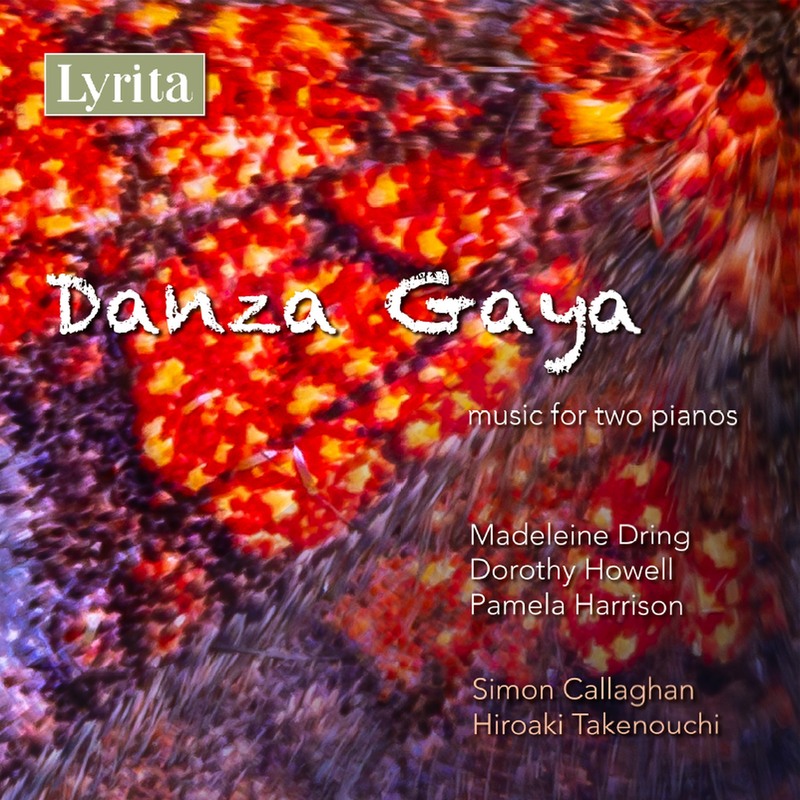
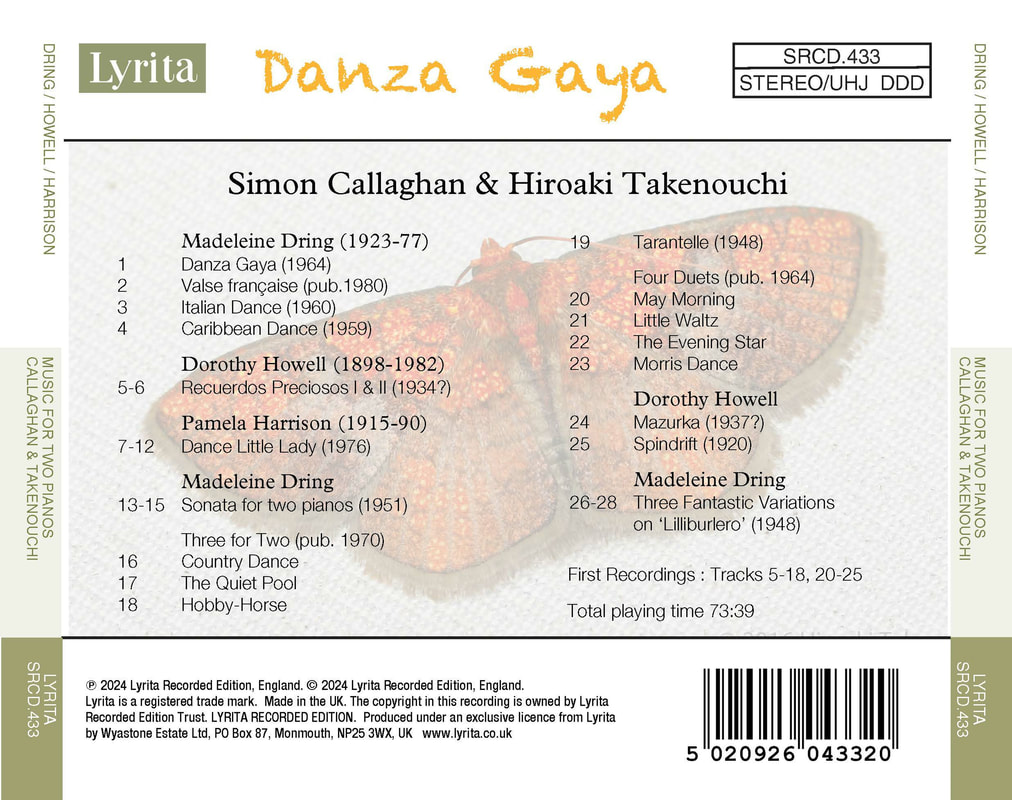
Lyrita Recorded Edition releases British Piano Concertos on 2 May 2025, with music by John Addison, Philip Cannon and Francis Chagrin, performed by soloist Simon Callaghan with the BBC National Orchestra of Wales conducted by William Boughton (SRCD.444)
Picture
Click above to dowload from iTunes with digital booklet or stream on Apple Music
Philip Cannon’s Concertino for piano and strings (1951) dates from his formative years. It was written for the Petersfield Festival, where it was premiered on 27 January 1951 by soloist Joseph Cooper, with the Petersfield Orchestra conducted by Kathleen Merritt. This lively, neo-classical piece has achieved over a thousand performances internationally.

Though John Addison’s Concertino for piano and orchestra is, for the most part, couched in a light-hearted language, it is the product of a serious, and unfailingly inventive, approach to keyboard and orchestral writing. Speaking of the work to Lesie Ayre of the London Evening News, the composer remarked that, ‘it is a real concerto in the full sense of the word...I would not be ashamed to show the work to any first-class pianist’.

Francis Chagrin maintained an intensely practical and unpretentious attitude towards his own craft, observing that, ‘My music is not for first performances– it is just to be played’. His Piano Concerto was first performed by soloist Franz Osborn, with the London Symphony Orchestra, conducted by the composer, at an SPNM Experimental Rehearsal held at the Royal College of Music on 4 February 1944.

Conversation Piece by John Addison was written in 1958 to a commission from the BBC Concert Orchestra for that year’s British Light Music Festival. John Addison felt that, by the late-1950s, too great a divide had opened up between serious and light music: ‘Concert goers think contemporary music is so alarmingly serious that when confronted with a mildly witty turn of phrase, they assume something has gone wrong. I remember the astonished sigh of relief when, in the course of introducing one of my chamber works, I told the audience I would not mind if they smiled’. In Conversation Piece, Addison exploits to the full his talent to amuse and divert.

Picture
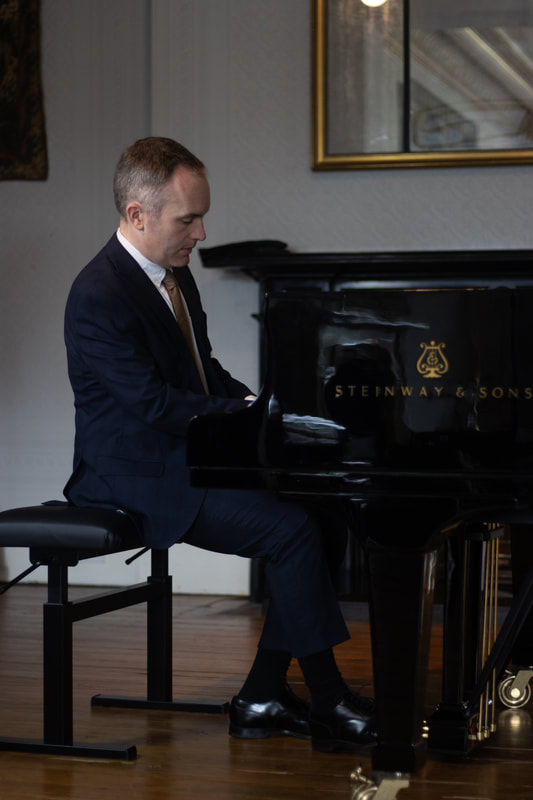
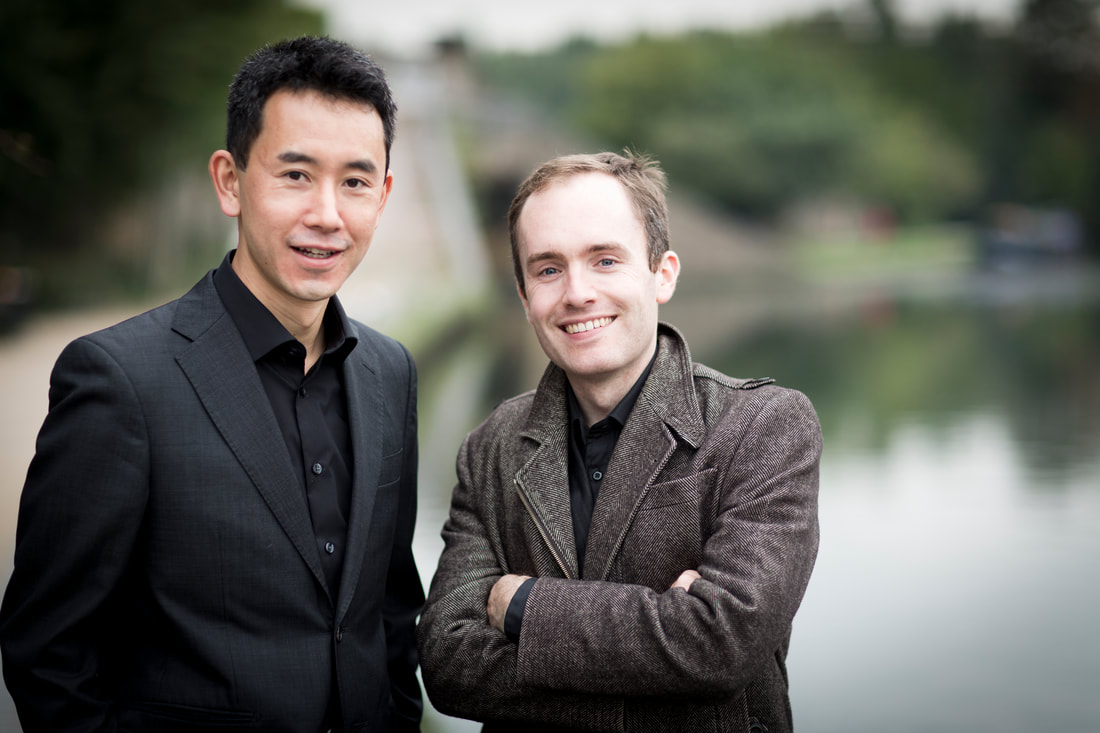
Simon Callaghan performs internationally as a soloist and chamber musician, in parallel with a highly successful career as a recording artist. A favourite performer at the internationally-renowned Husum Festival of Piano Rarities in Germany, Callaghan’s recent sell-out concert was praised by VAN Magazine as a “cleverly curated recital full of discoveries” and by the Frankfurter Allgemeine Zeitung as “technically brilliant”.

Callaghan has developed a wide following and appears on a regular basis in the UK’s major concert halls, and on tours to Asia, North America and Europe. Recital partners have included Sheku Kanneh-Mason, Nicholas Daniel, Adrian Brendel, Feng Ning, Samuel West, Prunella Scales and Timothy West. BBC Young Musician of the Year Finalist Coco Tomita and Callaghan have a successful duo partnership which saw their first record released in 2022 on Orchid Classics. He is also a founding member of the London Piano Quartet, joining colleagues from the renowned Piatti Quartet to showcase the repertoire for piano quartet with a particular focus on revivifying works that have fallen into obscurity.


Electronic press kit for reviewers and radio presenters available from Ulysses Arts.

0 Comments

ENGLISH SYMPHONY ORCHESTRA RECORDS RELEASES FIRST ALBUM: ELGAR SYMPHONY NO.1 AND IN THE SOUTH, ON 28 MARCH 2025

6/2/2025

0 Comments

 
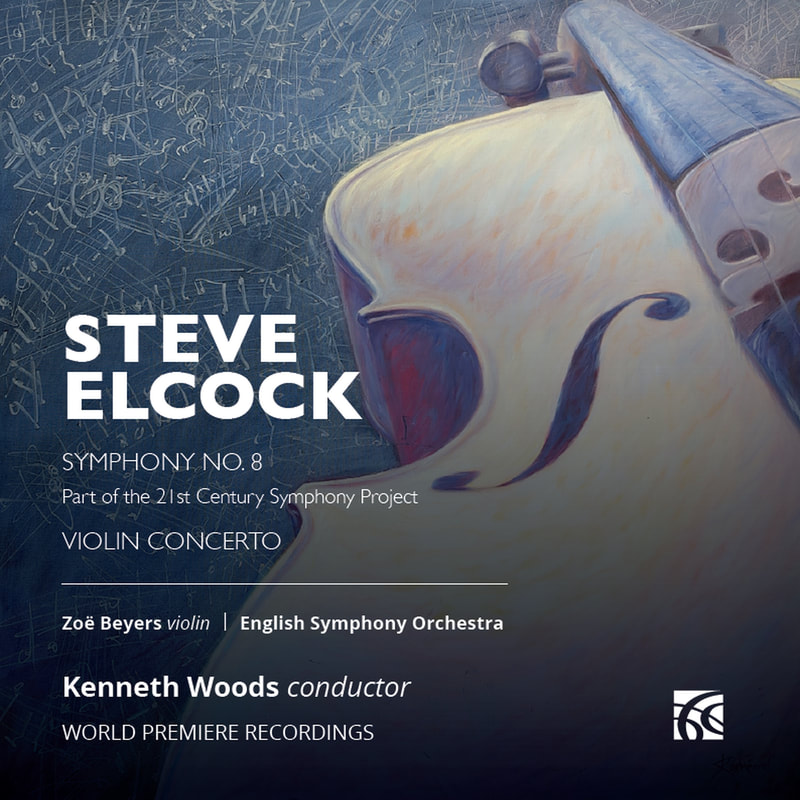
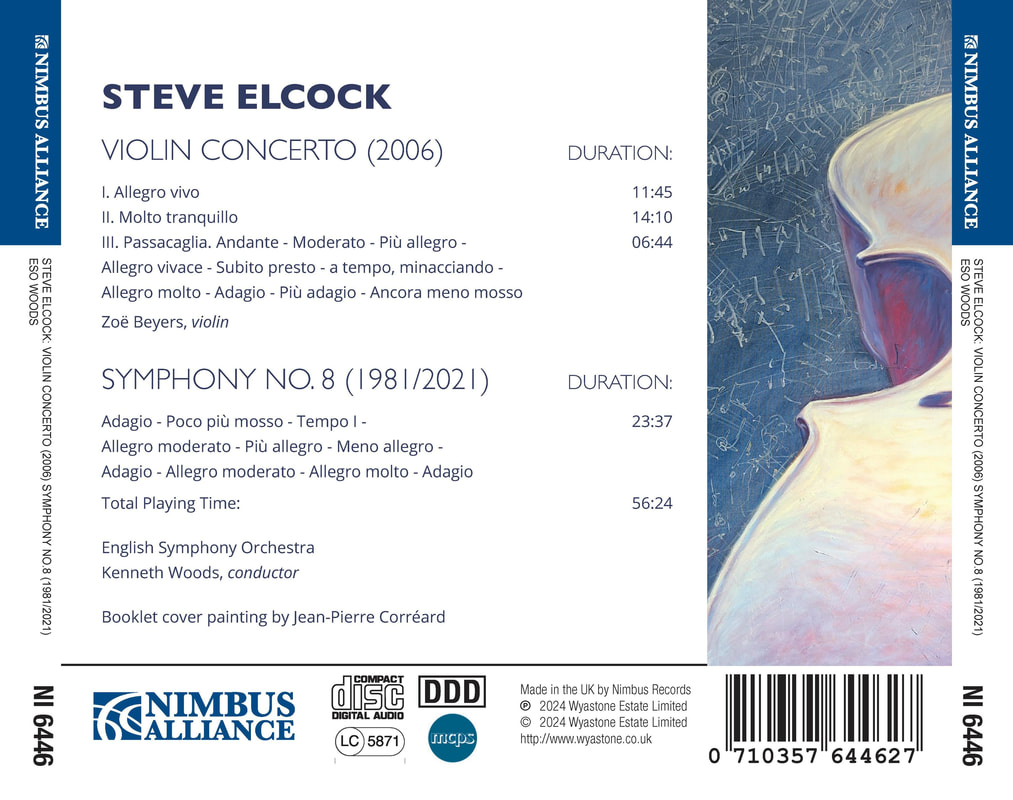
English Symphony Orchestra Records announces the release of its first album, with live recordings of Elgar Symphony No. 1 and In The South conducted by Principal Conductor and Artistic Director Kenneth Woods, on 28 March 2025, in partnership with Ulysses Arts (ESO2501).
Picture
Click above to download on iTunes with digital booklet or stream on Apple Music
PictureKenneth Woods, conductor
'From my first contact with the ESO, it was clear this music was in their blood. My predecessor, Vernon Handley, was as fine an Elgarian as there’s ever been, and a protégé of Elgar’s preferred conductor, Adrian Boult. Yehudi Menuhin, possibly Elgar’s closest collaborator at the end of his life, was our Principal Guest Conductor for the last decade of his life.

With the memory of their contributions to the orchestra’s Elgar legacy still fresh, it felt from day one that Elgar here is no distant historic figure of the past. Unlike Gustav Mahler, whose own performances only survive on a few piano rolls, we can even see and hear Elgar the conductor. These performances are informed deeply by the many revelatory lessons I have gleaned from listening to his definitive and thrilling interpretations of his own music.


There are studio recordings aplenty of Elgar’s major works. Our aim with these Elgar Festival Live recordings is not simply to share a performance of a piece, but to share a memory of an occasion and a flavour of this magical place. Each is a record of a single performance that grew out of a week’s immersion in all things Elgar, down to the sights he saw, the streets he walked and the air he breathed. I never take for granted that I get to stand on the same spot in Worcester Cathedral that Elgar did so many times, not so long ago. I hope the passion and virtuosity of my incredible colleagues, the intensity of our audience’s listening, and the magical acoustics of this great building all help you to feel closer to Elgar.

Elgar Festival Live is to remind us that Edward Elgar is someone whose personality remains fresh in the memory. He is somewho whose legacy is very much alive, whom the listener can think of more as a friend of a friend.'

Kenneth Woods, ESO Principal Conductor and Artistic Director


Pre-Release Singles
Picture
Released on 28 Feb 2025
Picture
Released on 14 Mar 2025


Electronic press kit for reviewers and radio producers available from Ulysses Arts.
0 Comments

J A MONTEIRO LIMEHOUSE MASS EP RELEASES ON 21 FEBRUARY 2025

12/12/2024

0 Comments

 
J.A. Monteiro's Limehouse Mass, performed by the Happenstance Singers conducted by Matthew Swann, is released by Ulysses Arts as an EP on 21 February 2025 (UA250020). The release also includes Monteiro's And Ruth said, Ave Maria, and organist James Gough playing Ye Choirs of New Jerusalem.
Picture
Click above to download on iTunes with digital booklet or stream on Apple Music


Pre-Release Singles


Electronic press kit for reviewers and radio producers available from Ulysses Arts Ltd.

0 Comments

LYRITA RELEASES GRACE WILLIAMS MISSA CAMBRENSIS ON 7 MARCH 2025

30/11/2024

0 Comments

 
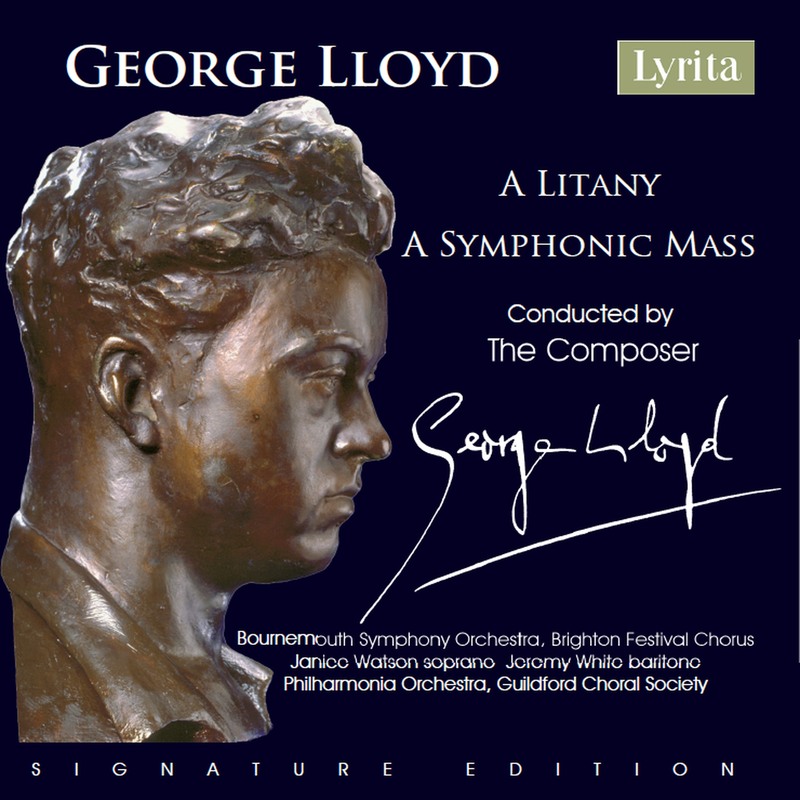
Lyrita Records releases the world première recording of Grace Williams, Missa Cambrensis, on 7 March 2025, with the BBC National Orchestra & Chorus of Wales conducted by Adrian Partington, soloists April Fredrick, Angharad Lyddon, Robert Murray and Paul Carey Jones, Côr Heol y March (music director, Eleri Roberts) and narration by The Very Rev'd Dr Rowan Williams (SRCD 442).
Picture
“Arguably the most prominent female composer from Wales, Grace Williams (1906-1977) is enjoying a revival of interest, with several new recordings of her music in recent years.” David Smith, Presto Music

Inscribed to the memory of Grace Williams’s friend Nancy Elizabeth Jenkins, who died of cancer shortly before the work was completed, Grace Williams’s Missa Cambrensis is a full-scale setting of the Mass in Latin and Welsh, scored for soprano, alto, tenor and bass soloists, mixed chorus, boys’ choir, orchestra and speaker. The orchestral forces required consist of two flutes (second doubling piccolo), two oboes, (second doubling cor anglais), two clarinets, bass clarinet, two bassoons, contrabassoon, four horns, two trumpets, two tenor trombones, bass trombone, tuba, timpani, percussion (two players: cymbals, glockenspiel, tubular bells, tam tam), piano and strings. Missa Cambrensis is Grace Williams’s magnum opus, the last major musical statement by a composer of rare integrity. It dominates all her other concert works, investing the score with a commanding, almost legendary status. A. F. Leighton Thomas once commented on ‘the essentially human quality of her music’ and this directly communicative aspect of her writing shines through the score. Her honesty and sincerity inform her individual treatment of the Latin text and the Welsh additions to the material are a natural corollary of the pride she took in her nationality. As Malcolm Boyd concluded, the Missa Cambrensis is ‘a work of great power, rich in incident, generous in feeling, and exemplary in craftsmanship’.  © Paul Conway, 2024

“It’s stunning. There is so many moments that are really moving … there’s a kind of incandescence about the writing and a degree of musical imagination that just seems to sparkle.” April Fredrick, interview with Antony Smith, Managing Director, Nimbus Records

“The Missa Cambrensis of Grace Williams, her last large scale composition, is the crowing jewel of her choral output. Whilst demonstrating a high regard to Benjamin Britten the Missa Cambrensis is imbued with lyrical inspiration and a powerful unique voice. From the incorporation of the Welsh Carol Nadolig and the reading of the Beatitudes in Welsh, her voice soars throughout demonstrating masterful craftmanship at every turn. My hope is that this recording contributes to raising the recognition that her music deserves, which may lead to more performances of this outstanding contribution to the choral repertoire.” Matthew Wood, Senior Producer, BBC National Orchestra & Chorus of Wales


Grace Williams gives “a reminder that preaching, communicating the Gospel speaks to something other than just the ideas we have in our heads. It speaks to the rhythms of our bodies, our breath, our blood.” Dr. Rowan Williams, former Archbishop of Canterbury, interview with Antony Smith, Managing Director, Nimbus Records


Picture
Missa Cambrensis Track List

I. Kyrie Eleison
1.Kýrie, eléison. Christe, eléison 5:06
II. Gloria
2. Glória in excélsis Deo 2:44
3. Laudamus Te 4:03
4. Domine Deus 2:42
5. Qui tollis peccata mundi 2:01
6. Quonium to solus sanctus 1:04
7. Cum Sancto Spiritu 2:31
8. III. Credo in unum Deum 6:32
9. Carol Nadolig 2:00
10. Credo [conclusion] 1:40
11. Beatitudes 2:41
12. Crucifixus 10:45
13. IV. Sanctus 6:44
14 Benedictus 5:39
15. V. Agnus Dei 3:26
16 Dona Nobis Pacem 6:56


Pre-order, download and streaming links will be published here.

Press kit and listening links for reviewers and radio producers available from Ulysses Arts.
0 Comments

LYRITA RELEASES BRITISH 'CELLO WORKS VOLUME 3 - HURLSTONE, SWINSTEAD, CARWITHEN, BRIDGE - WITH LIONEL HANDY AND JENNIFER WALSH ON 7 FEBRUARY 2025

16/11/2024

0 Comments

 
Lyrita Records releases British 'Cello Works Volume Three with music by William Hurlstone, Felix Swinstead, Doreen Carwithen and Frank Bridge, with Lionel Handy, 'cello and Jennifer Walsh, piano, on 7 February 2025 (SRCD 441).
Picture
Click above to download on iTunes or stream on Apple Music
William Hurlstone’s Cello Sonata in D major (1899) was written for the noted cellist and composer May Mukle. In his review of the score, Havergal Brian opined that Hurlstone’s sonata ‘shows ripe and mature musicianship... The Adagio Lamentoso is unusual in its sustained eloquence... the slow movement and the lovely final Rondo standing out in a rare and attractive work’.

The manuscript of Felix Swinstead’s Cello Sonata was discovered by the pianist Clive Williamson, while he was clearing the house of Vivian Langrish and his wife Ruth Harte, Swinstead's friends. It is possible that this F major Sonata might have been written just before the composer’s death and never performed in public. According to Lionel Handy, Ruth was ‘a second study cellist and Swinstead may have thought a run-through, if not a performance, might be possible, but there is no record of any performance nor date of composition as yet’.

Doreen Carwithen’s 'Cello Sonatina (1944) draws upon the stringed instrument’s sonorous, lyrical qualities. The often-striking piano material is crucial to the unfolding narrative, rather than offering mere accompaniment and creates a genuine dialogue between the two protagonists.

Frank Bridge’s two-movement Cello Sonata was begun in 1913, but not completed until 1917. Bridge always looked fondly upon the Cello Sonata, which has proved to be one of the composer’s most popular chamber works and remains the most regularly played of all his substantial pieces for two players.
 
Lionel Handy
 
“Lionel Handy was principal cellist at the Academy of St Martin for ten years with whom he recorded and toured extensively throughout USA and Europe... As a soloist he has played as guest principal cellist with many of the UK’s leading orchestras including the Philharmonia, LSO, RLPO, LPO, ECO and Halle.”  © Royal Academy of Music
 
Jennifer Walsh

 
“Jennifer Walsh is a collaborative pianist and duo coach who performs across the UK and internationally.  She has given recitals at venues including Wigmore Hall, Sala Verdi Milano, Oslo Opera Housel and Xinghai Conservatory, China.” © Jennifer Walsh, 2023

Picture

Press kit and private listening link for reviewers and radio presenters available from Ulysses Arts.
0 Comments

LYRITA RELEASES WILLIAM BUSCH CHAMBER MUSIC ALBUM ON 3 JANUARY 2025

10/10/2024

0 Comments

 
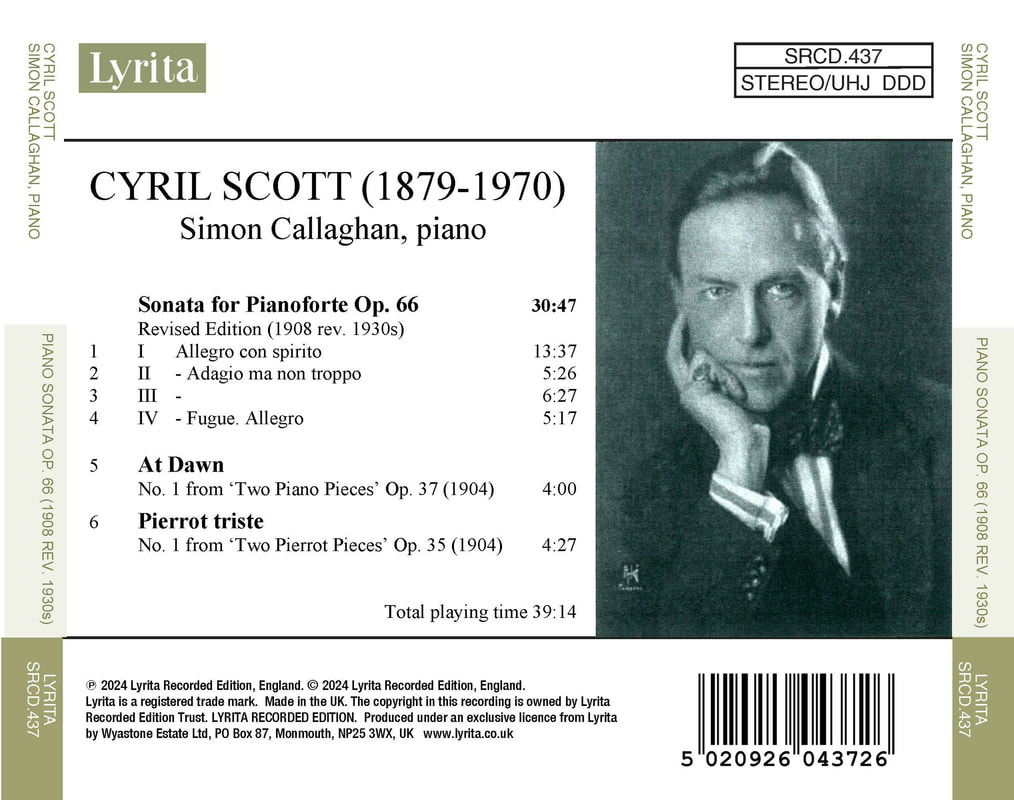
Lyrita releases its Chamber Music of William Busch album on 3 January 2025, with members of the Piatti Quartet, Simon Callaghan and Ashok Klouda (SRCD 439).
Picture
Click above to download on iTunes or stream on Apple Music
Three Pieces for Violin and Piano were written as individual works: as such, they can be presented separately or, if given collectively as a suite, played in any order. Busch wrote his Passacaglia for violin and viola in 1939: the score takes the form of a decisive, four-bar theme followed by thirty variants upon it. These mini variations range widely in character, from trenchant and forceful to airy and smooth.

A Memory for 'Cello and Piano was written for Elizabeth Poston. Busch subtly conveys the idea of a reminiscence suggested by the title with simple, lightly sketched ideas presented with an air of hazy nostalgia. Eventually, the feeling of distance and reserve created in the opening portion of the work is replaced by a more troubled mood. The music ends in sorrow with a heartfelt, steeply descending sequence for unaccompanied cello followed by the merest hint of the opening material.

The Quartet for Piano and Strings is the most substantial of William Busch’s chamber pieces. Although the composer’s lyrical gifts are much in evidence, the four movements are also rigorously concise. Considerable dramatic rewards are gained from the creative tension between the music’s unforced expressivity and the formal rigour with which Busch’s powerful themes are worked out.

The Suite for 'Cello and Piano is among Busch’s most searching and variegated instrumental works. In a postwar assessment of the score, The Times’ critic noted that its four pieces ‘reveal a sensitive and interesting mind’.

Elegy for 'Cello and Piano exploits fully the stringed instrument’s lyrical qualities and capacity for rich, autumnal colours. The work begins with an extended soliloquy for unaccompanied cello and the cellist continues to preside over the entire opening section, which features only a couple of brief interjections from the piano.  © Paul Conway

'The performances here are excellent. The members of the Piatti Quartet, violinist Michael Trainor, violist Zahra Benyounes and cellist Jessie Ann Richardson are joined by pianist Simon Callaghan and 'cellist Ashok Klouda. ... The recording in the Concert Hall, Wyastone Leys has been well judged and the notes, as mentioned, are in the best of hands – Paul Conway’s. Busch is a composer with a gift for expressive intensity.'
Jonathan Woolf, MusicWeb International, 25 November 2024


'This is wonderful and original music, superbly performed.'
Gary Higginson, British Music Society, 26 November 2024


'Aquest disc és per a nosaltres una revelació. La música serena de William Busch, interpretada impecablement pel Piatti Quartet, ens duu a un desenllaç emocionant i desafiant.'
Marçal Borotau, Sonograma, 29 December 2024


'William Busch (1901-45) whose Three Pieces for Violin and Piano (1943-44) and Passacaglia for Violin and Viola (1939) are among the gems of little-known English music. ... Confirming his reputation as an interpreter of 20th-century English music, pianist Simon Callaghan gives an impressive projection of Busch’s music. ... Full marks, too, for members of the Piatti Quartet: Michael Trainor, violin; Zahra Benyounes, viola; and Jessie Ann Richardson, cello — all beautifully recorded in the famously rich acoustic of the Wyastone Leys Concert Hall.'
Stuart Millson, Quarterly Review, 4 January 2025

'I have been most impressed by the music and performances here, and I live in hope that this composer enjoys the recognition that he truly deserves. ... Also to be commended are the accompanying notes and the excellent sound recording. I highly recommend this disc.'
Geoff Pearce, Classical Music Daily, 5 January 2025


'... die Symbiose aus ausdrucksvoll gezeigter spielerischer Linie und plastischer Ausarbeitung der Strukturen.'
'... the symbiosis of expressive, playful line and vivid elaboration of the structures is successful.'

Pizzicato, 9 January 2025
Picture

EPK and listening link for reviewers and radio programmers available from Ulysses Arts Ltd.

Picture
William Busch (1901-45)  'developed a passion for music and took piano lessons at an early age, though he harboured no ambitions of a professional career as a pianist until his teenage years.' (Paul Conway). During many years he studied music with France Woodmansee and A. W. Lilienthal, piano with Leonid Kreutzer and Benno Moiseiwitsch, harmony with Hugo Leichtentritt, and composition with leading British composers Alan Bush, John Ireland and Bernard van Dieren.

'As the 1930s progressed, Busch began to focus increasingly on composition and soon forged his own personal creative language. This decade saw the first of his many songs, a widely acclaimed Piano Concerto, and on 1 June 1935, his marriage to Sheila, with whom he had two children, Nicholas and Julia. His life was cruelly cut short when he died of an internal haemorrhage at Woolacombe, Devonshire on 30 January 1945, robbing British music of one of its most promising and versatile talents.' Paul Conway


0 Comments

ULYSSES ARTS RELEASES STEPHEN HORNE SOUNDTRACK TO HITCHCOCK'S THE MANXMAN ON 10 JANUARY 2025

18/9/2024

0 Comments

 
Ulysses Arts releases Stephen Horne's soundtrack to Alfred Hitchcock's 1929 silent film The Manxman, orchestrated and conducted by Ben Palmer wth the Orchestra da Camera di Pordenone and soloists Louise Hayter, oboe, and Jeff Moore, violin, on 10 January 2025 (UA240130). The Manxman will be screened live at the 2025 San Francisco Silent Film Festival on 11 January at Grace Cathedral.
Picture
Click above to download with digital booklet on iTunes or stream on Apple Music

Ulysses Arts · Laura Roman interviews Stephen Horne about his score for Hitchcock's The Manxman

Silent London, 1 Oct 2024

Ron Schepper, Textura, February 2025
'An illuminating portrait of this most talented artist.'

PictureStephen Horne
One of the world's leading silent film performers, Stephen Horne is a house musician at London’s British Film Institute Southbank. Principally a pianist, he often incorporates other instruments into his performances, sometimes simultaneously. He regularly plays internationally and his accompaniments have met with acclaim at numerous film festivals across Europe, North America and Asia.

Stephen has recorded music for many restorations of classic and rediscovered silent films. In 2011 and 2012, he was commissioned to compose scores for the London Film Festival galas of The First Born and The Manxman. In 2012 his accompaniment for Rotaie won first prize at the Bonn Sommerkino Festival and he was subsequently invited to repeat the performance at that year’s Beethovenfest. For ten consecutive years, from 2014 to 2024, he has won in one or more categories in Silent London’s end-of-year poll.

In 2021 he recorded Silent Sirens, an album of solo piano pieces based on several of his silent film scores. It was released by Ulysses Arts and has performed well across digital platforms. In 2022, his orchestral score for Stella Dallas, commissioned by MoMA, was premiered at the pre-opening night of the Venice Film Festival.

PictureBen Palmer conducting The Manxman
In 2022, with the help of conductor-orchestrator Ben Palmer, Stephen completed two fully orchestrated scores for films that he had previous scored for small ensemble. Stella Dallas, commissioned by MoMA, was premièred at the Venice Film Festival and The Manxman formed the closing gala of Le Giornate del Cinema Muto, Pordenone in Italy.


The Manxman: Pre-Release Singles


Electronic press kit for reviewers and radio producers is available from Ulysses Arts Ltd.

0 Comments

LYRITA RELEASES GRAHAM HAIR PIANO MUSIC ALBUM ON 1 NOVEMBER 2024, PERFORMED BY MARTIN JONES

4/9/2024

0 Comments

 
Lyrita Records releases its Graham Hair Piano Music album on 1 November 2024, performed by Martin Jones (SRCD 436).
Picture
PictureGraham Hair
Composer Graham Hair writes: “I met pianist Martin Jones as a consequence of writing the Concert Study Wild Cherries and Honeycomb as a test-piece for the Scottish International Piano Competition, in 1998. Martin heard about this piece from the chairman of the competition jury, Bryce Morrison, and this eventually led to my writing more Concert Studies over the next fifteen years, as well as the other works on this album.

Twelve Transcendental Concert Studies on Themes from the Australian Poets, refers specifically to the post-Lisztian Tradition of virtuoso pianism (including such figures as Australian pianist Percy Grainger), which has always seemed to me a corecomponent of Martin Jones’s pianism. The titles are all drawn either from specific poems or from specific passages within those poems.

Two other commissions are also represented: Dances and Devilment and Sunlit Airs, commissioned by the Australian pianist Michael Harvey in 2000, and Under Aldebaran, commissioned much earlier, by the Sydney International Piano Competition, during the mid-1980s. All of the other works were written between 2008 to 2024.


Étude-variations: Under Aldebaran is also a Concert Study, based on the poem by Australian poet James McAuley, but is very different from the collection of the ‘Transcendental’ 12. It’s the only atonal piece in this album, and by far the most complicated in its detail, and was written many years earlier.

Rococo Fantasies is a set of 11 bagatelles. Each moves from one tone-centre to another: often via ‘chromatic mediant’ harmony (a major or minor third above or below the tone-centre). Book One contains 6 of them. They endeavour to create a variety of idiosyncratic rhetorical characters by swerving between multiple metrical, thematic and textural ideas rapidly in the course of a few measures in some of the pieces, but beavering away at just one or two (over rapidly modulating harmonic changes) in others.

Passacaglia on the chorale ‘Komm, Gott Schöpfer, Heiliger Geist’ by J.S. Bach is based on a chorale melody derived from the famous plainsong hymn Veni Creator Spiritus. This is the ‘ground bass’ on which this Passacaglia is built. However, like many Passacaglias in the Canonic Repertoire, the theme often strays into the upper voices of the texture, and because of the relative length of the theme, it has something of the sense of a set of variations as much as of a Passacaglia.
 
…During recent times (2008-2024), I have completed more compositions than in all the previous periods put together, though in some cases that has meant completing projects started earlier: in a time characterised by the decay, and in many cases the collapse, of the institutions which have dominated political, social, economic and cultural life and practice during the three post-war generations (1950-2024). The subtitle of my forthcoming book, The Scottish Voices Reader, puts it thus: Cultivating the Classical Traditions in the Age of the War on Everything.”   © Graham Hair


'A revelation of 21st-century pianism, both in Hair’s writing and in Jones’ playing.'
Maureen Buja, Interlude, 23 December 2024

Picture
Martin Jones has been one of Britain’s most highly regarded solo pianists since first coming to international attention in 1968 when he received the Dame Myra Hess Award. The same year he made his London debut at the Queen Elizabeth Hall and his New York debut at Carnegie Hall, and ever since has been in demand for recitals and concerto performances in Europe, Russia, Australia, Canada, North & South America. He has made over 90 recordings with Nimbus Records exploring music that is not often played including the complete works of 18 composers.

'Martin Jones is a skilled and sensitive artist with an imaginative response that is faultless.' Gramophone


Picture

Electronic press kit and listening link available from Ulysses Arts Ltd.

0 Comments

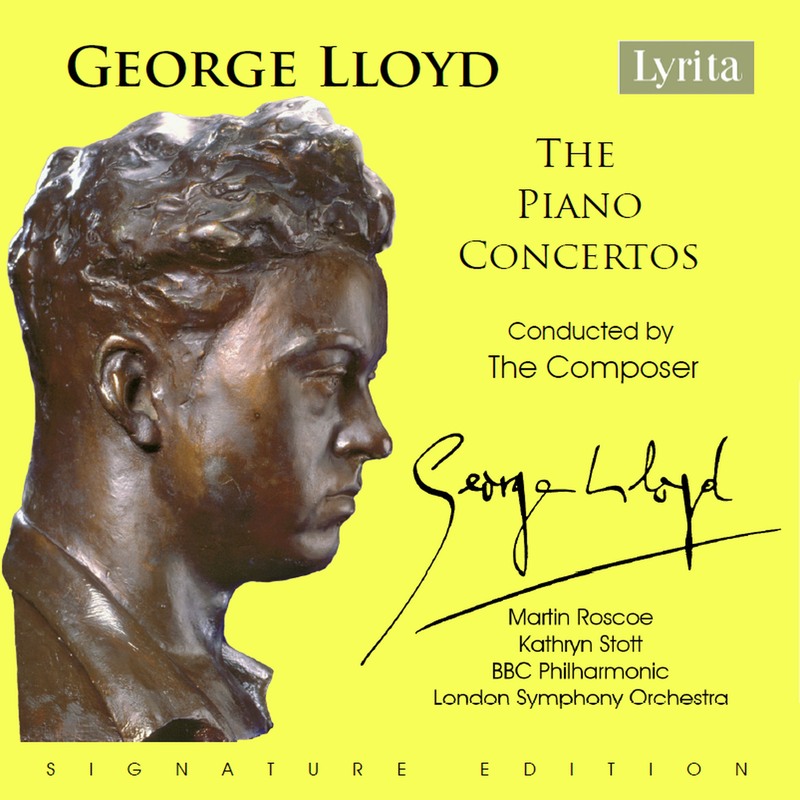
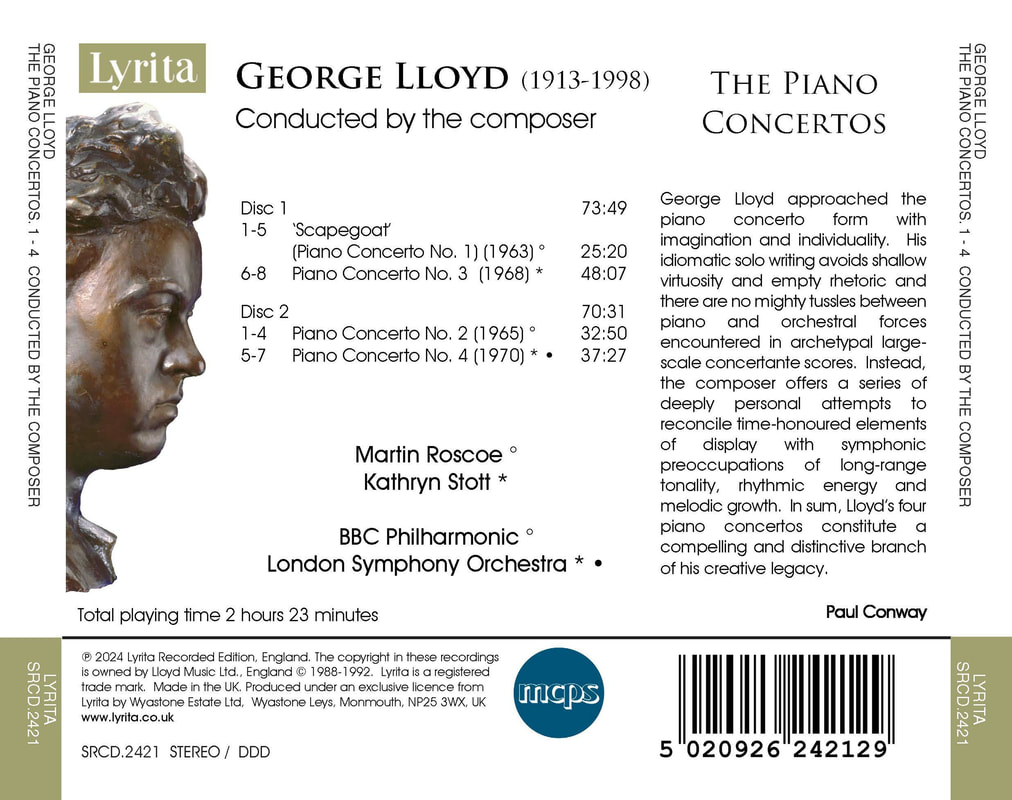
LYRITA RELEASES GEORGE LLOYD VIOLIN AND PIANO WORKS ALBUM ON 1 NOVEMBER 2024

4/9/2024

0 Comments

 
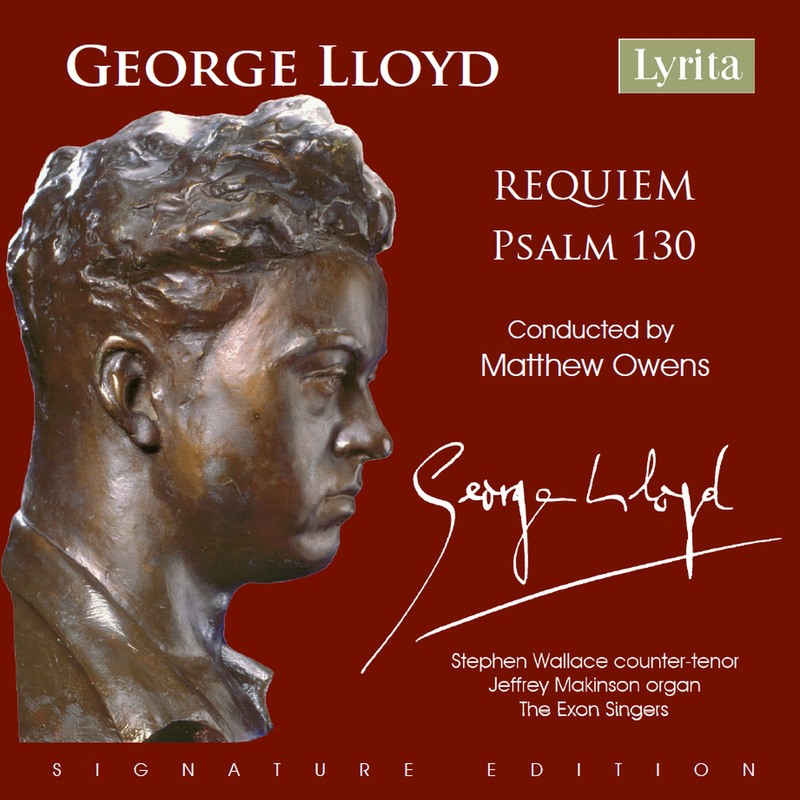
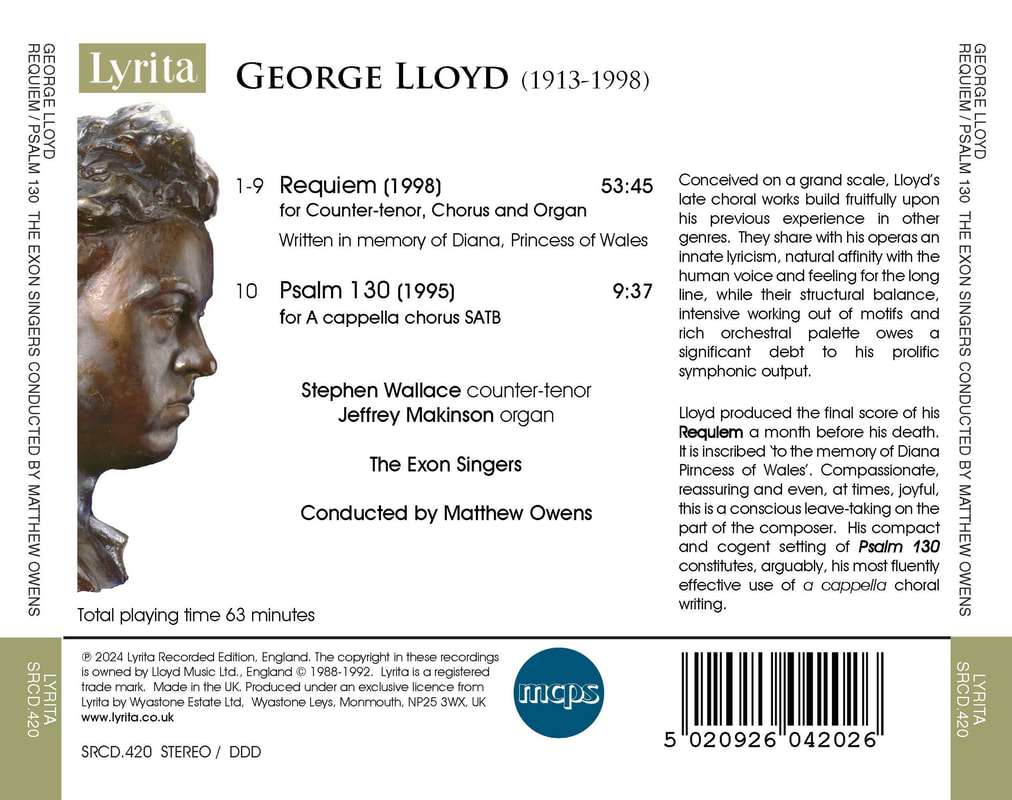
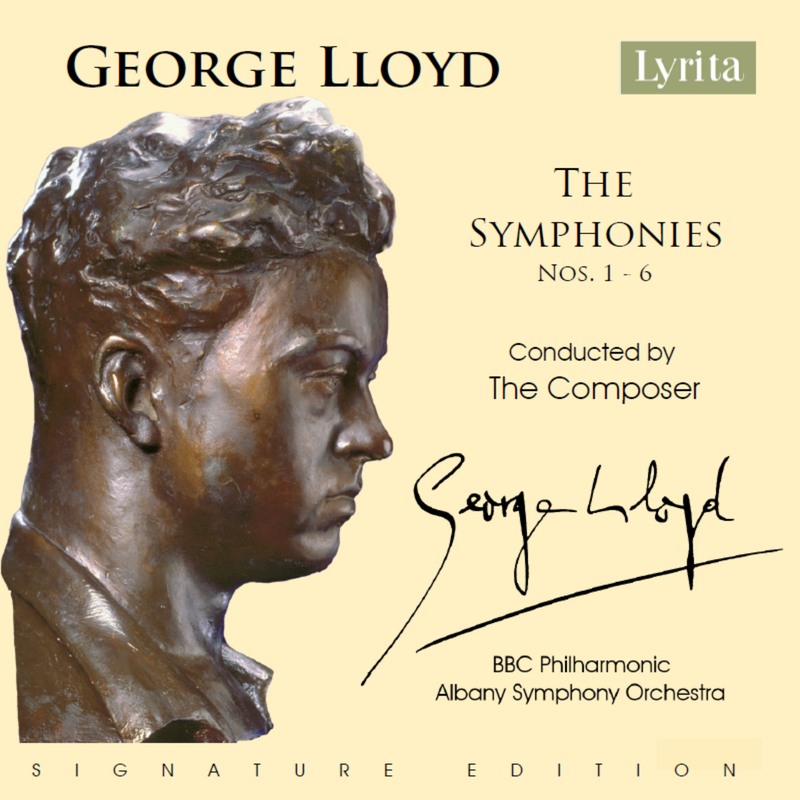
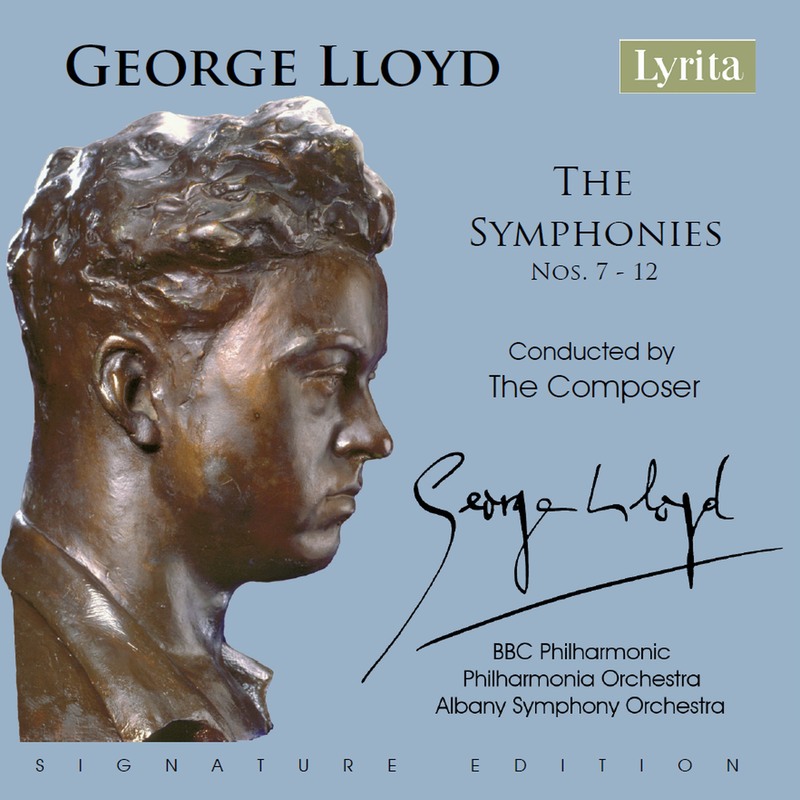
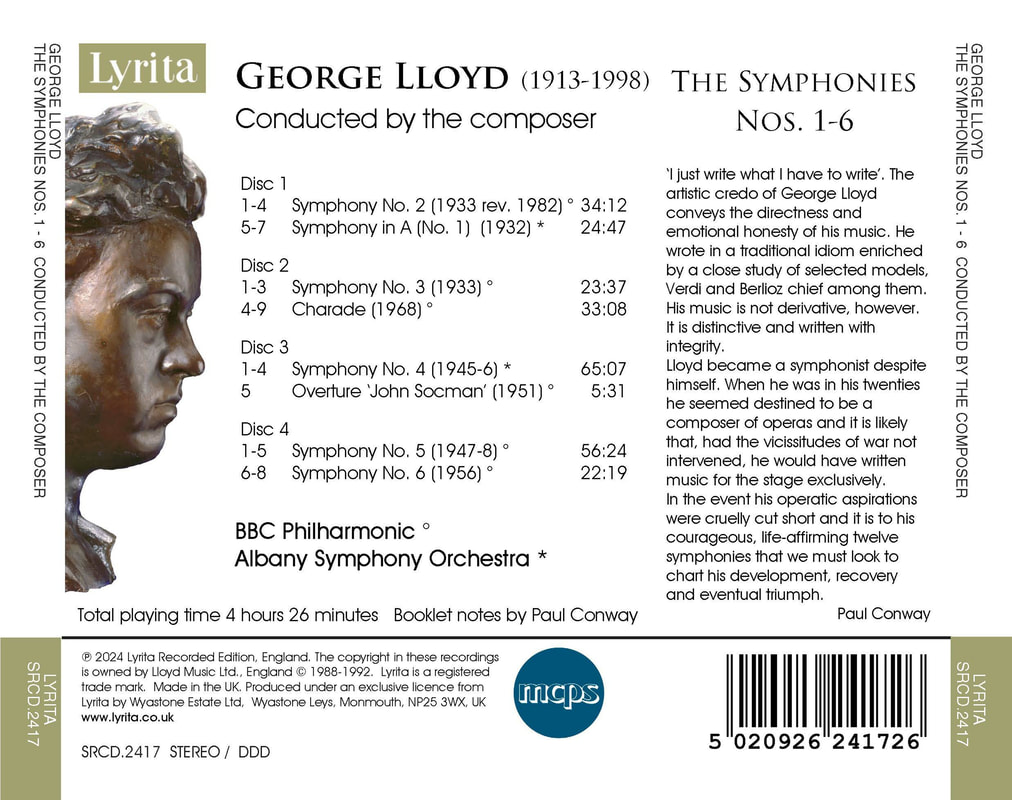
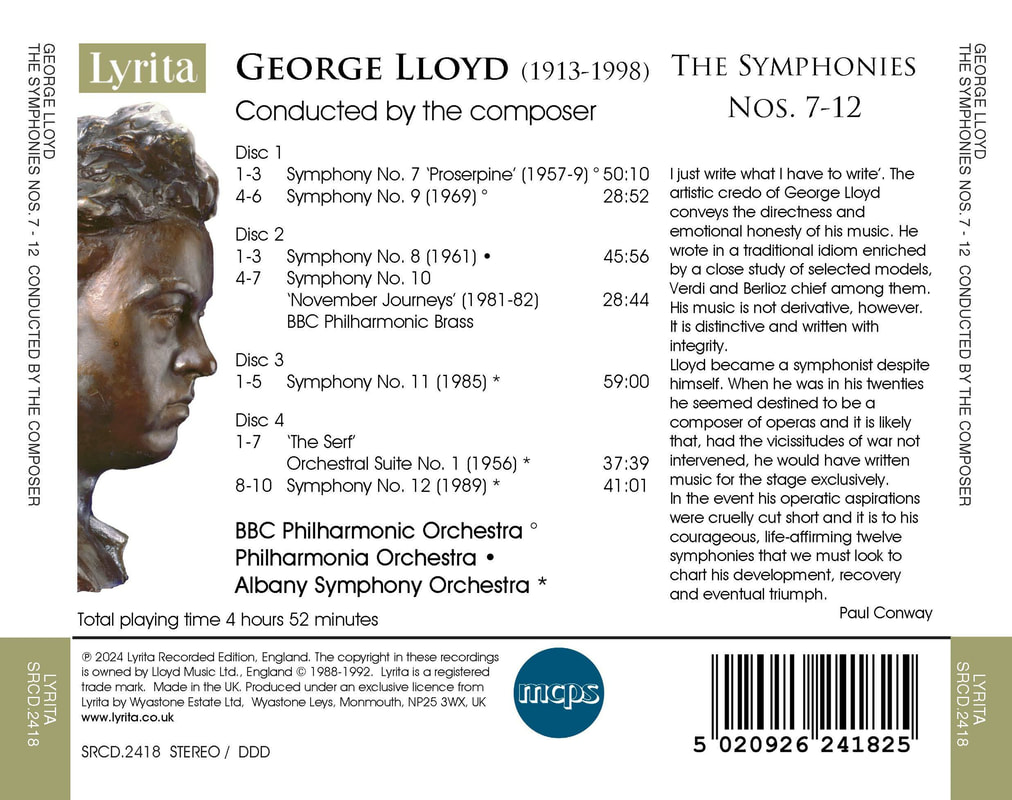
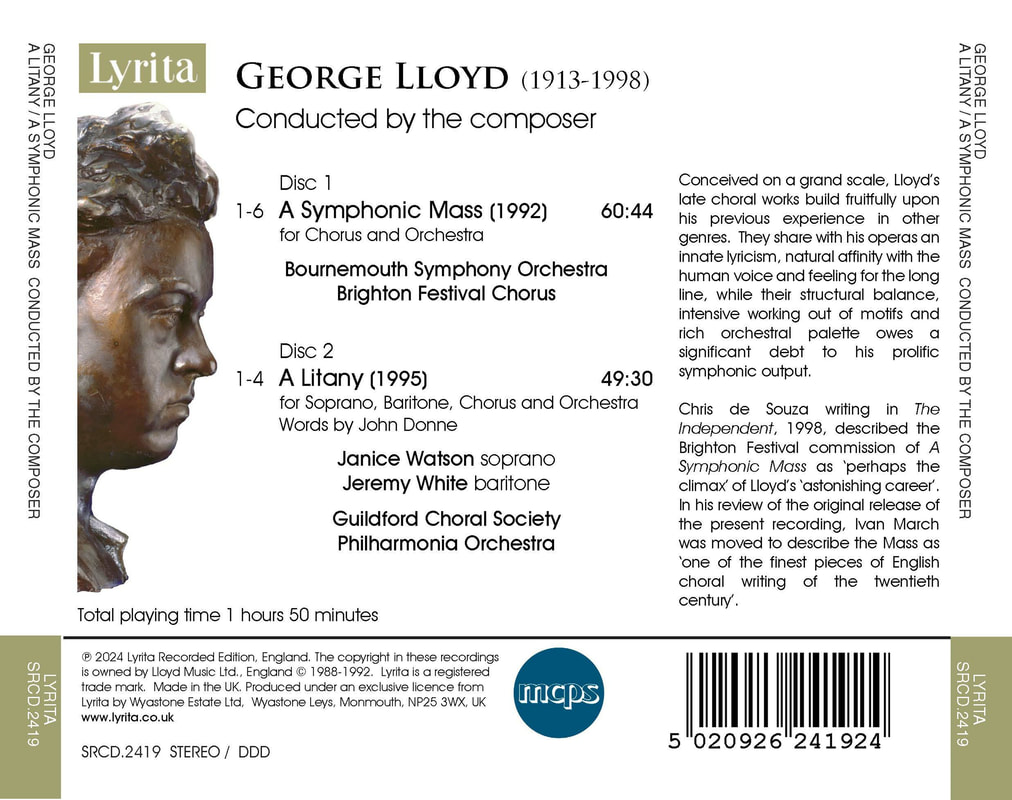
Lyrita Records releases its George Lloyd Violin and Piano Works double album on 1 November 2024, with Tamsin Little, Martin Roscoe, Ruth Rogers and Simon Callaghan (SRCD 424). The album is part of Lyrita's 2024-25 George Lloyd Signature edition.
Picture
George Lloyd started to learn the violin at the age of five and he was a pupil of the violinist Albert Sammons for six years. In his youth, Lloyd’s talent as an instrumentalist allowed him to participate in local musical events from formal concerts to more convivial gatherings: a 1930 newspaper report of a ‘social in the Zennor schoolroom’ observed that ‘Mr George Lloyd played the violin and dancing was indulged in’.

Looking back on his formative influences, Lloyd singled out Sammons as having the most lasting effect on his burgeoning creativity, identifying the latter’s ‘instinctive, freely expressive playing’ as having a direct bearing on the kind of music he began to write. In this regard, Lloyd’s description of the sound of Sammons’s playing as ‘gorgeous’, with ‘a lyrical quality’ in which ‘every note seemed to sing’ chimes with the composer’s own essentially lyrical approach to musical lines and phrases.

Despite his facility in playing the violin and the importance he attached to his lessons with Albert Sammons, Lloyd was relatively slow to compose works for his own instrument. It was not until 1970 that Lloyd wrote Violin Concerto No. 1, his first piece with a leading role for his own instrument, but this achievement seemed to stir his enthusiasm and during the next seven years he completed a number of pieces for violin and piano, a fully-fledged sonata and a second concerto. The Seven Extracts from The Serf for violin and piano (1974) were published in 2024, and are here recorded for the first time.
© Paul Conway


Picture

Electronic press kit and pre-release listening link available for reviewers and radio producers from Ulysses Arts.

0 Comments
<<Previous

    UA Press Centre

    New recordings, press releases, media resources, music industry comment and more from Ulysses Arts.
    Archives

    May 2026
    April 2026
    February 2026
    January 2026
    October 2025
    September 2025
    August 2025
    July 2025
    April 2025
    March 2025
    February 2025
    January 2025
    December 2024
    November 2024
    October 2024
    September 2024
    August 2024
    July 2024
    June 2024
    May 2024
    April 2024
    February 2024
    January 2024
    November 2023
    October 2023
    September 2023
    August 2023
    July 2023
    June 2023
    May 2023
    April 2023
    February 2023
    January 2023
    December 2022
    November 2022
    October 2022
    September 2022
    August 2022
    July 2022
    June 2022
    May 2022
    April 2022
    March 2022
    February 2022
    January 2022
    December 2021
    November 2021
    September 2021
    May 2021
    April 2021
    March 2021
    January 2021
    December 2020
    November 2020
    October 2020
    September 2020
    August 2020
    July 2020
    June 2020
    May 2020
    April 2020
    January 2020
    October 2019
    April 2019
    June 2018
    September 2017
    August 2016
    June 2015
    May 2015
    April 2015
    March 2015
    October 2014

    Categories

    All
    Ablaze Records
    Apple
    Baroque Music
    BBC
    Brass
    British Music
    Chamber Music
    Choral
    Classical
    Colorado MahlerFest
    Concerts
    Contemporary
    CRD Records
    Early Music
    Education
    English Symphony Orchestra
    Fugue State Records
    High Resolution Audio
    IDAGIO
    Ireland
    ITunes
    Live Recordings
    Luminate Records
    Lyrita Records
    Music Books
    Music Centre Slovakia
    New Releases
    Nimbus Records
    Opera
    Orchestral
    Orchestre De Paris
    Organ
    Piano Music
    Platoon
    Sacha Puttnam
    Sacred Music
    Spotify
    Streaming
    String Orchestra
    TIDAL
    Turkey
    Video
    Violin Music
    Vocal
    World Première Recordings


Our Services

Label Services
Digital Distribution
Press and PR
Digital Marketing
Due Diligence
Artistic Programming
Venue Strategy

Sitemap

Home
About
What We Do
Clients
Contact
Blog


Contact Us

Email Ulysses Arts
Registered Office: 170, Finchley Road
London NW3 6BP

Copyright 2023 Ulysses Arts Ltd. 
Website by Kenyon Arts