Ulysses Arts
  • Home
  • About
  • What We Do
    • Label Services
    • Due Diligence
    • Digital Distribution >
      • Highlands&Sea
    • Press and Public Relations >
      • Vibrant Rhythms
    • Digital Marketing
    • Artistic Programming >
      • Adalar Istanbul Concert 2020
      • Büyükada Ensemble String Quartet Concert 16 July 2022
      • Darkness illuminated
      • Adalar Istanbul Concert 2019
    • Concert Venue Strategy
  • Clients
  • Contact
  • UA Press Centre
  • Playlists
  • Ulysses Arts on Spotify
  • Ulysses Arts on Idagio

Nimbus celebrates composer Richard Blackford's 70th anniversary year with new recordings, publications and live performances throughout 2024

16/11/2023

0 Comments

 
Picture
Richard Blackford

Nimbus celebrates composer Richard Blackford's seventieth anniversary year with a major series of new album releases, music publications and concerts throughout 2024.

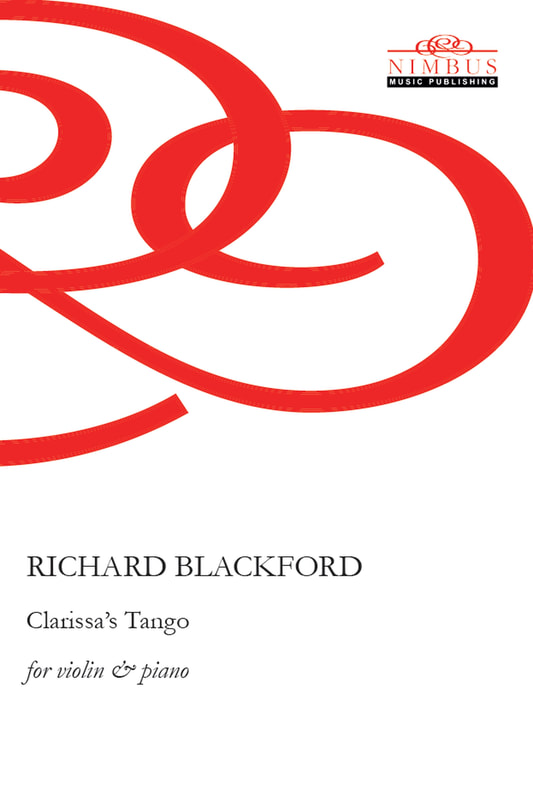
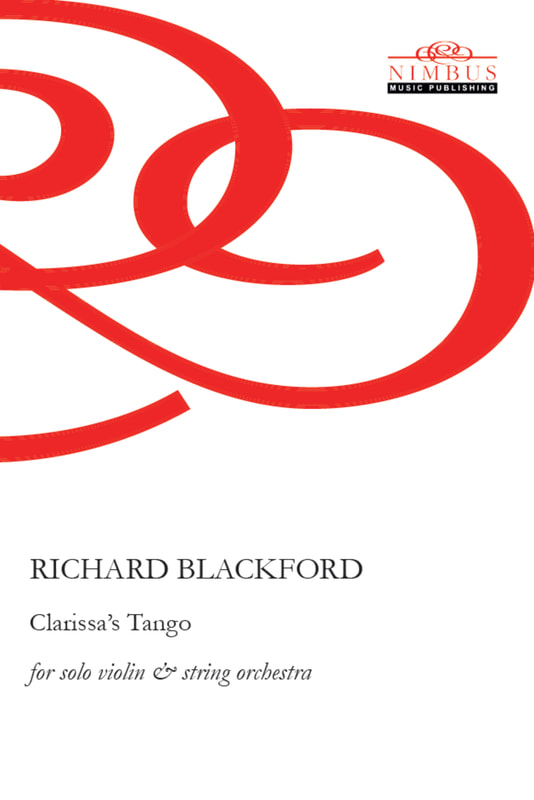
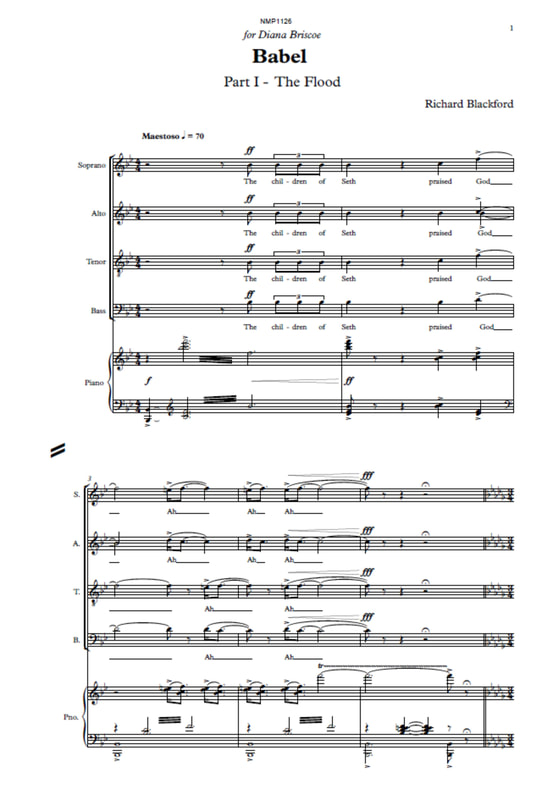
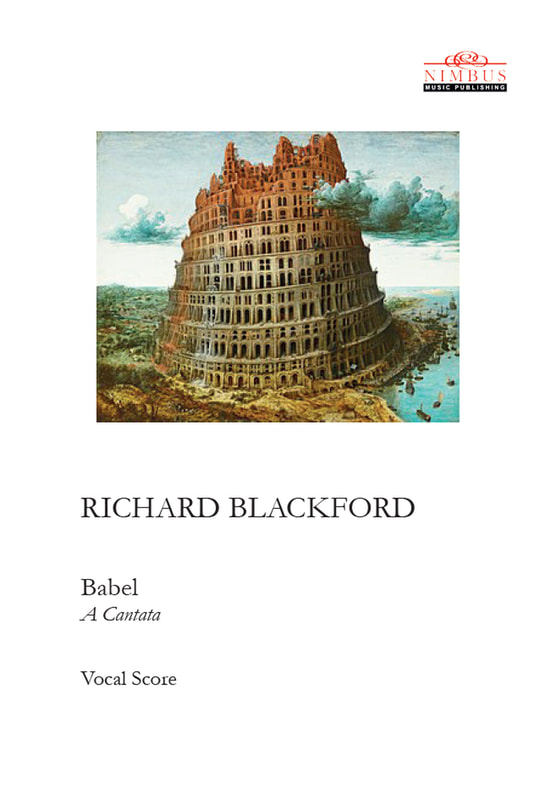
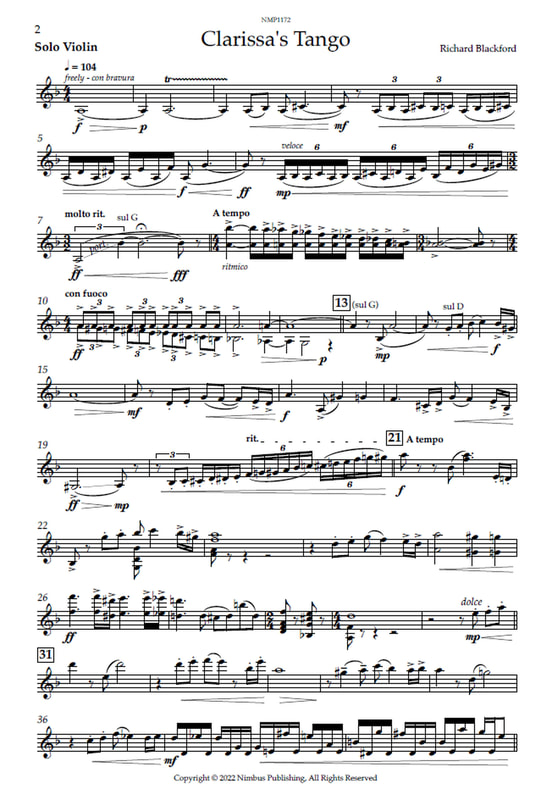
5 January 2024: Nimbus Music Publishing releases scores for Babel, a new cantata for chorus, soloists, piano, organ and percussion (NMP.1126) and Clarissa's Tango. The latter has two versions: for violin and piano (NMP.1172), and for violin and string orchestra (NMP.1255). Clarissa's Tango also will be released on the same date as an audio (NI.1580) and audio-visual single (NI.1581), performed by Clarissa Bevilacqua, violin, and Thomas Hoppe, piano.


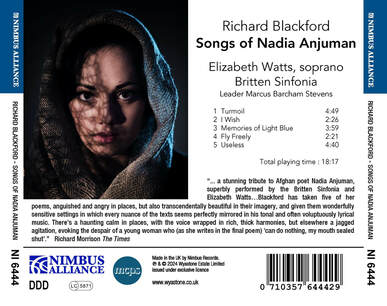
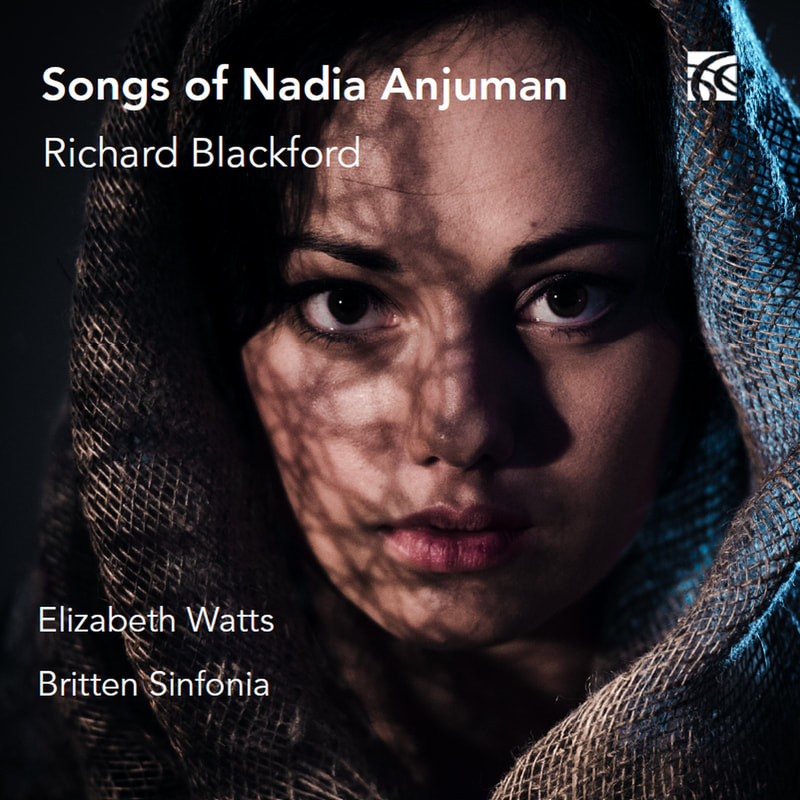
1 March 2024: Nimbus Records releases Blackford's Songs of Nadia Anjuman, performed by The Britten Sinfonia and soprano Elizabeth Watts, as an EP (NI.6444):
Picture
Picture

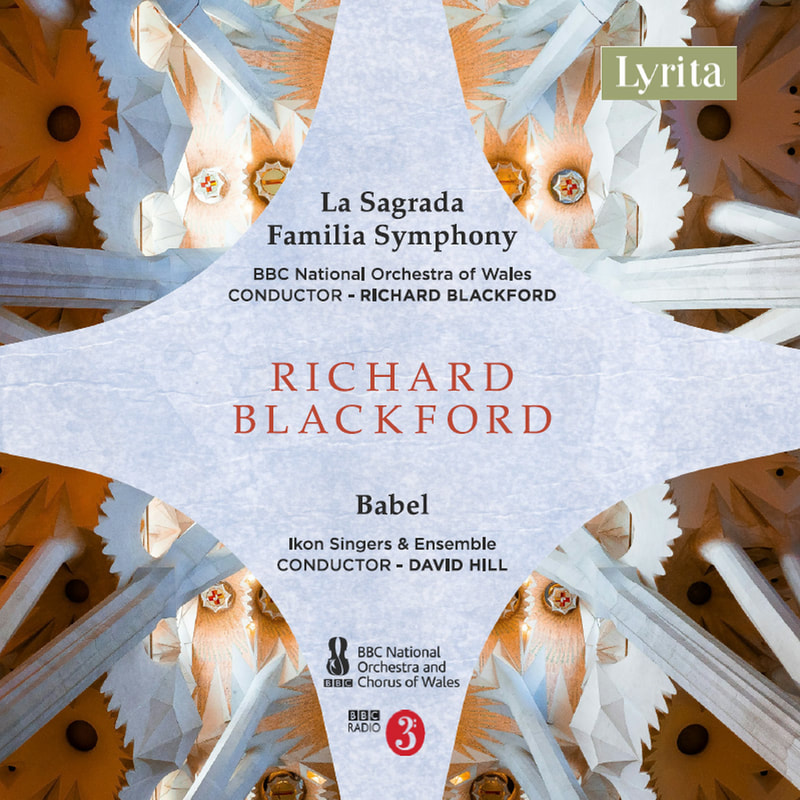
Also on 1 March 2024: Lyrita Records releases La Sagrada Familia Symphony, with BBC National Orchestra of Wales conducted by Richard Blackford, and Babel: A Cantata, with the Ikon Singers conducted by David Hill (SRCD.432):
Picture
Picture

Ron Schepper, Textura, 27 Feburary 2024

'Entering the Spritual Forest'
Maureen Buja, Interlude, 11 March 2024


New Works by Richard Blackford from Nimbus Music Publishing: 5 January 2024
Picture
NMP1126
Picture
NMP1172
Picture
NMP1255
Picture

Richard Blackford writes about his new works:

Babel is a dramatic cantata based on the stories of Noah’s Flood and the Tower of Babel, with a thrilling and colourful score using organ, piano and percussion. Babel uses the chorus extensively to narrate both stories, as well as to evoke the terror of the Flood, the exuberance of the construction of the tower, and of course the multi-lingual babble of languages to which they are condemned. In addition to set pieces, such as the Nimrod baritone aria, and the soprano aria, ‘Do not fear the largeness of the showers’, the three soloists often sing together as the other-worldly voice of God. The instrumental forces are relatively modest, with the piano duet supported by the sustaining power of the organ, backed by two percussionists. This sound world is redolent of those Britten masterpieces for amateur choirs, ensembles and audiences, which have inspired many composers since, and to which I too am gratefully indebted.'

Babel's vocal score (NMP.1126) is for sale; full score and parts (NMP.1127) are available to hire. Approximate duration 38 minutes.
Picture
'In Buenos Aires, tango is described as the forbidden dance. In this performance the violin and piano capture not only the sound but also the essence of tango, creating an evocative dance between the instruments. The violin has the lead melodic material and the piano has some really exciting riffs and plays the supportive role guiding their interplay.

I remember seeing the amazing film Scent a Woman starring Al Pacino and Gabrielle Anwar. Pacino plays a blind veteran but he has an amazing sense of smell and he invites a beautifully young woman to dance a tango, something that he does supremely well. It's just one of the coolest most beautiful scenes that I can remember. After I saw it for the fifth time I just woke up one night with the idea of a tango which wouldn't go away, so I had to write it.

Clarissa’s Tango starts with a short, cadenza-like introduction on the solo violin, the tango is cast in rondo form, with the central C section moving from the home key of D minor to D major. It’s an ebullient duet that makes virtuoso demands on the solo violin, from extreme high tessitura passages and multi-stops to fast passage work as the violin elaborates on the main tango melody.'

'Tango is very visual and we wanted to capture this as a part of our release. Alongside performing the première and making the audio recording, we also filmed a companion video in Berlin. Violin and piano, represented by red and black, are two perfect dance partners who find each other in this darkly lit club-like atmosphere, where the camera dances around them eliciting this Tango. But in the sunlight outside our red and black characters fail to find each other, only when they perform this Tango do then they finally come together as one. I performed Richard Blackford's Tango with the LGT Soloists throughout their tour of Europe, Asia and Australia from November 2023 to January 2024.' Clarissa Bevilacqua

Click here for more details of Richard Blackford's live performances.

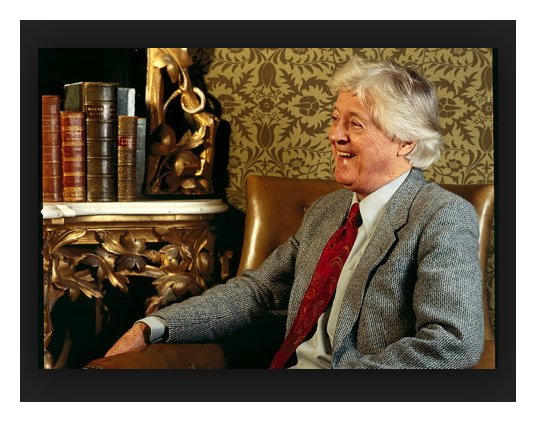
Richard Blackford is becoming one of the foremost concert and media composers in Europe. His concert works are performed regularly around the world and his music for film and television is broadcast frequently in almost every European country. His acclaimed Pietà won an Ivor Novello Composer Award in 2020 for the Choral Category and has already received multiple performances.

'The music comes from the heart with integrity, and a technical assurance...There is a crying need for this kind of music.' The Independent on Sunday

Further Richard Blackford 2024 album, publication and live concert details will be published here.
Electronic press kit and listening links for revieweres available from Ulysses Arts.

0 Comments

George Lloyd Signature Series: Lyrita Nimbus Arts releases the complete recordings and published works of George Lloyd from March 2024 to early 2025

10/11/2023

0 Comments

 
Picture
George Lloyd

George Lloyd Archive of Scores and Recordings moves to Lyrita Nimbus Arts

The Trustees of Lyrita Nimbus Arts (LNA) reached an exclusive agreement in 2023 with The George Lloyd Society (GLS) to take over sale and hire of all George Lloyd’s scores held by the Society, as well as the commercial exploitation of the recordings made by the Society in the 1990s, conducted by the composer.

Read George Lloyd: Myths and Misconceptions by Peter Davison, published in Corymbus

Picture
Picture
Picture
Picture
Picture
Picture
George Lloyd (1913-98) is remembered mostly for his twelve symphonies; his compositions also include operas, choral works, concertos, piano and chamber music. LNA approached GLS with a proposal that involves the complete digitisation of George Lloyd's scores and his entire record archive represented in new compilations. Going beyond preservation, LNA's Trustees believe Lloyd’s music is ripe for rediscovery by concert managers and music lovers. His music, particularly the operas, won great praise and popularity before World War Two. When broadcasting and concert life changed direction in the 1960s, his style - dramatic, large-scale, richly orchestrated, unafraid of a big tune - fell out of favour. We believe that George Lloyd’s time has come again and will use the combined resources of the Lyrita Nimbus Arts charity and Lyrita label, together with the manufacturing, printing, publishing and distribution arms of Nimbus Records, to support this venture.

William Lloyd was the composer’s business manager and executive producer; he has administered his record company and musical estate for the last twenty-five years. He writes: 'Our agreement with Lyrita Nimbus Arts is another milestone in the extraordinary story of George Lloyd and his music. The Lyrita label was responsible for issuing the first three commercial recordings of Lloyd’s symphonies over 40 years ago, and it is entirely fitting that Lyrita Nimbus will now take the complete catalogue of scores and recordings into the future. Lloyd was fiercely independent, and with the invaluable assistance of Albany Records USA, together with some of the best engineers and recording producers in the business and his loyal audience, he was able to maintain that independence from mainstream publishers and record companies. This allowed him to record over 20 albums under his own baton, and to publish his extensive catalogue under the imprint of the George Lloyd Music Library, but it came at a price. His commercial success was remarkable and was sufficient to finance all the recording and printing, but until now we have not had the international marketing reach, the in-house manufacturing and printing, and the digital distribution platforms which are required by the new global markets. This is a perfect match for us, and it is a great vindication of Lloyd’s faith in the enduring quality of his work that Lyrita have recognised its value and committed significant resources to bringing his music to a new audience.'

Because George Lloyd’s personal attention is a dominating influence on the scores and recordings – which mostly he conducted himself – we have decided to headline this representation the ‘Signature Edition’. Scores will be cleaned, new orchestral parts created and recordings reorganised into affordable sets with new notes commissioned from Paul Conway. All digital platforms will have access to a unified and comprehensive offering from a single source.

'Hugely impressive, splendidly designed musical architecture.'
Stuart Millson, Quarterly Review, 29 February 2024

'It is an extraordinary journey to hear the whole of George Lloyd’s symphonies over a single period of time, a psychodrama if ever there was one.' Geoffrey Atkinson, British Music Society Journal
26 February 2024 (Symphones 1-6) and 22 March 2024 (Symphonies 7-12)


'An absolute must-have for anyone deeply invested in powerful and polished 20th century symphonic writing.'
Jean-Yves Dupperon, Classical Music Sentinel, March 2024

'Those of us who have admired Lloyd’s music for many years will welcome the consolidation of his legacy in this way and will hope it stimulates more performances and perpetuates his name even more.'
Jonathan Woolf, MusicWeb International, 13 March 2024

'Lloyd’s music is direct even when elusive, commanding even when equivocal, and is strongly lyrical – some of his lyricism is simply unforgettable. It is also richly, ripely and colourfully orchestrated.'
Symphonies No.7-12: Jonathan Woolf, MusicWeb International, 9 April 2024

'Rejoice! A glorious symphonic cycle by a British composer has been issued as a set for the first time.'
Damian Thompson, The Spectator, 13 April 2024

'Both sets of symphonies are valuable and incredibly well priced ... they should top the wishlist of any lover of orchestral music.' F.A.R., American Record Guide, 2024

'Richard Whitehouse applauds Lyrita’s advocacy on behalf of George Lloyd.'
Richard Whitehouse, Gramophone, 23 May 2024

All scores now available from Lyrita.
The recordings are being released by Lyrita between March 2024 and early 2025, with accompanying sheet music published by Lyrita Nimbus Arts:

www.lnarts.org  www.lyrita.co.uk  www.georgelloyd.com

Electronic press kits and pre-release listening links for reviewers are available from Ulysses Arts.

GEORGE LLOYD SIGNATURE EDITION AUDIO RELEASES

Picture

1 MARCH 2024

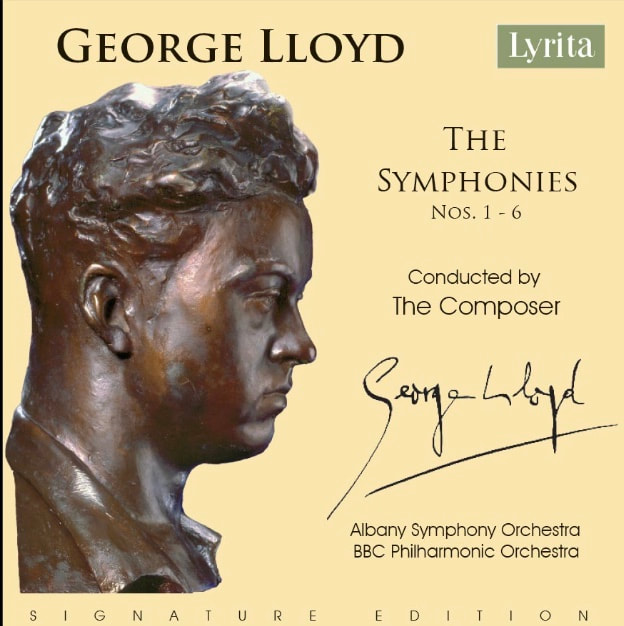
SRCD2417: Symphonies Volume 1

No. 1-6; Charade ‘Scenes from the ‘60s'
Overture John Socman

BBC Philharmonic Orchestra
Albany Symphony Orchestra
George Lloyd, conductor


Picture

5 APRIL 2024

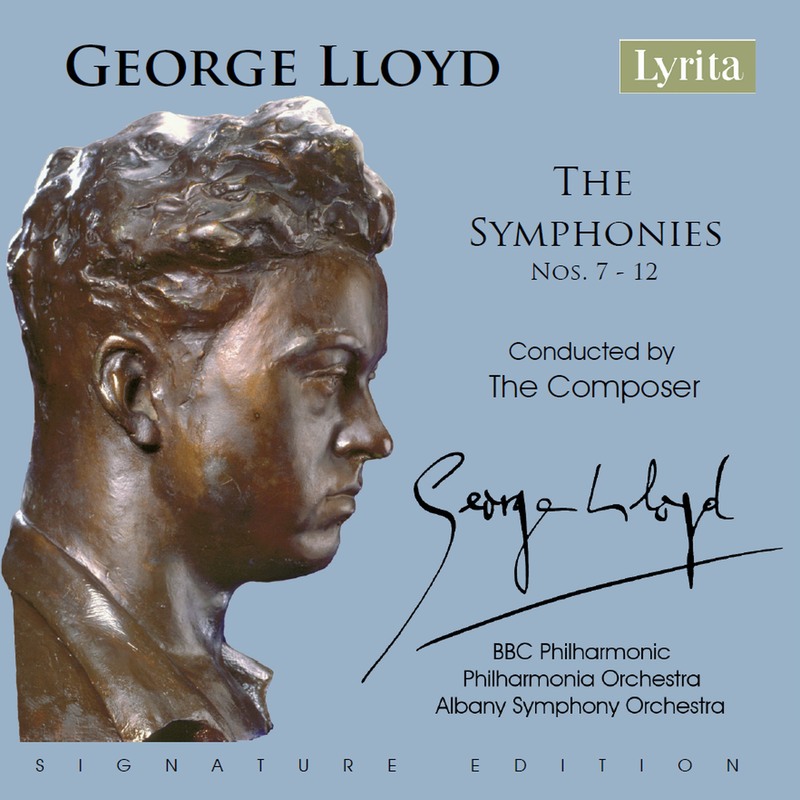
SRCD 2418: Symphonies
Volume 2
No. 7 - 12 (quadruple album)

BBC Philharmonic Orchestra
Philharmonia Orchestra
Albany Symphony Orchestra
George Lloyd, conductor


Picture

3 MAY 2024

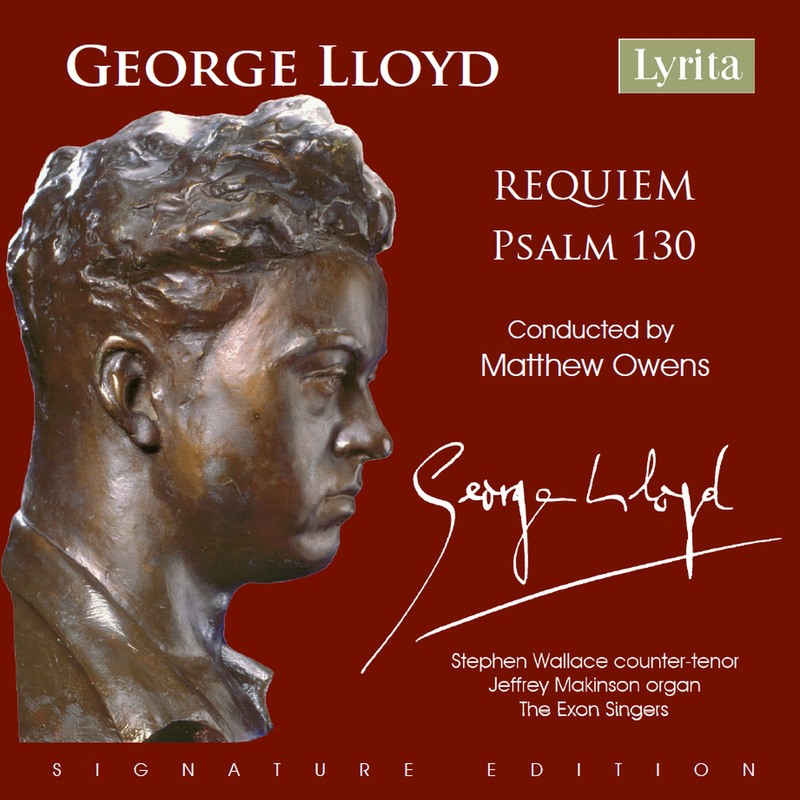
SRCD 420: Requiem and Psalm 130


The Exon Singers
Stephen Wallace, countertenor
Jeffrey Makinson, organ
Matthew Owens, conductor


Picture

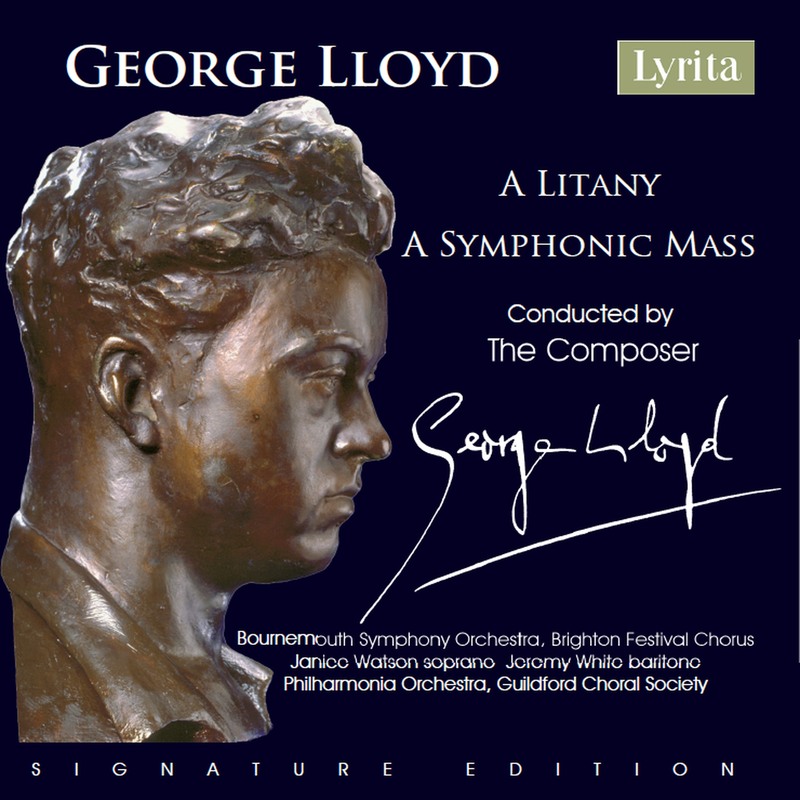
SRCD 2419: A Litany and A Symphony Mass

Janice Watson, soprano
Jeremy White, bass-baritone
Bournemouth Symphony Orchestra
Brighton Festival Chorus
Philharmonia Orchestra and Guildford Choral Society
George Lloyd, conductor


Picture
7 JUNE 2024

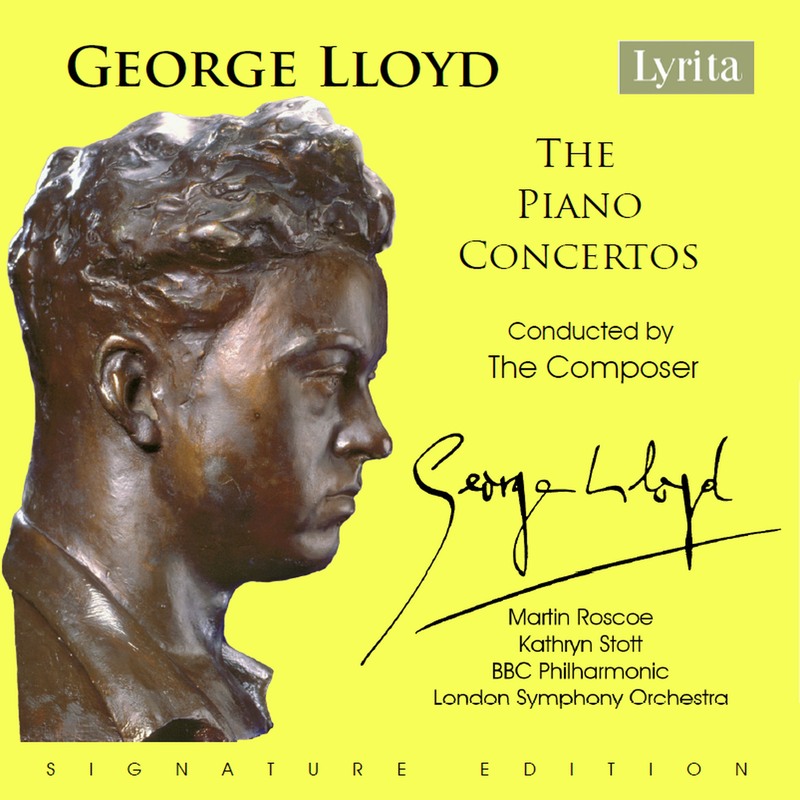
SRCD 2421:  The Piano Concertos
No. 1 ‘Scapegoat’, 2, 3 and 4 (double album)

Martin Roscoe, piano
Kathryn Stott, piano
BBC Philharmonic Orchestra
London Symphony Orchestra
George Lloyd, conductor


Picture
5 JULY 2024

SRCD2422: The Violin and 'Cello Concertos

(double album)
Violin Concerto No. 1 and No. 2
'Cello Concerto

Cristina Anghelescu, violin
Anthony Ross, 'cello
Philharmonia and Albany Symphony Orchestras
David Parry and David Alan Miller, conductors


Picture
2 AUGUST 2024

SRCD 2423: The Piano Works: Solo and Duo
: double album
The Lilly Leaf and The Grasshopper, The Transformation of that Naked Ape, An African Shrine, The Road through Samarkand, St. Antony and the Beggar, Intercom Baby. For two Pianos - Aubade, Eventide, The Road Through Samarkand.

Anthony Goldstone and Caroline Clemmow, piano duo
Kathryn Stott; Martin Roscoe


Picture
SRCD 0425: The Works for Brass
Royal Parks, Diversions on a Bass Theme, Evening Song, H.M.S. Trinidad March, English Heritage, A Miniature Tryptic

John Foster
Black Dyke Mills Band, conducted by David King
Equale Brass Quintet


5 SEPTEMBER 2024: Score Publications

SRMP 0105-0114:
Aubade | Eventide


Road Through Samarkand for Two Piano (and version for solo piano) 

Lullaby | St. Anthony & the Beggar | The Agressive Fishes

The Lily-leaf the Grasshopper | The Transformation of that Naked Ape
An African Shrine

Picture
1 NOVEMBER 2024

SRCD0424: The Works for Violin & Piano
Lament for Violin & Piano, Air and Dance
Sonata for Violin & Piano
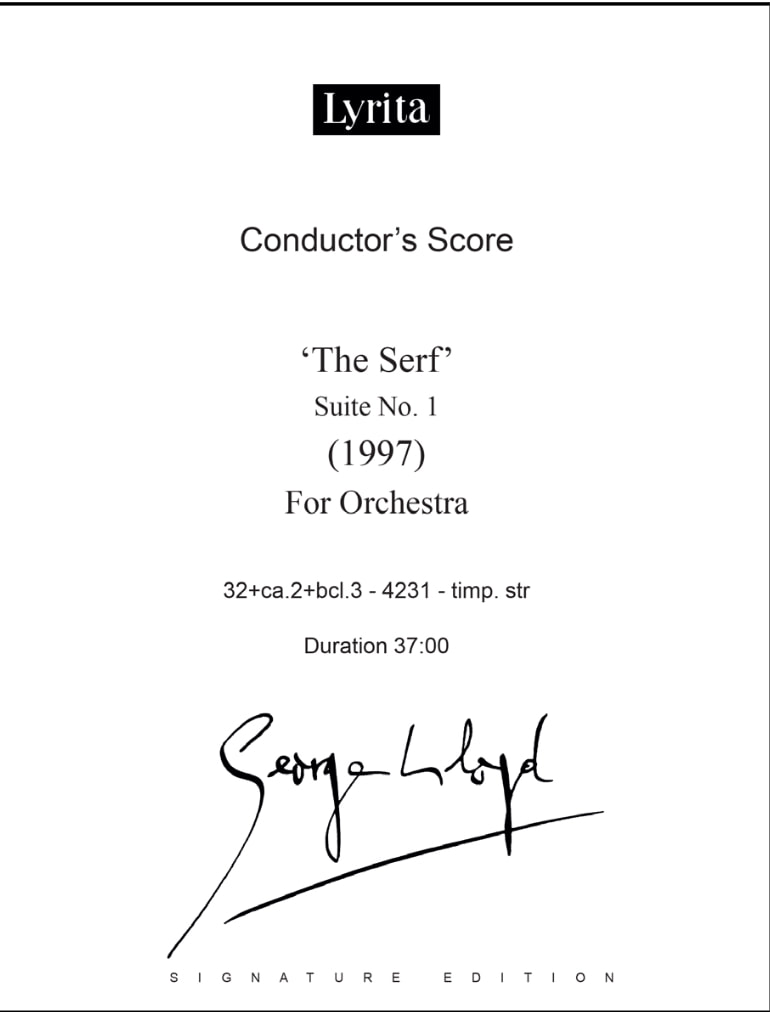
Seven extracts from The Serf

Tasmin Little, violin and Martin Roscoe, piano
Ruth Rogers, violin and Simon Callaghan, piano

6 MARCH 2025
Nimbus Lyrita Arts publishes four orchestral scores and parts by George Lloyd

Picture
Picture
Picture
Picture
SRMP 0031 – The Dying Tree (1992), for large orchestra, 10 minutes
A single movement orchestral sketch, first performed at London's Barbican Centre in 1994 by the Bournemouth Symphony Orchestra with the composer conducting. The Dying Tree is one of Loyd's few works not yet been recorded.
 
SRMP 0033 – Floating Cloud (1993), for large orchestra, 16 minutes
A single movement orchestral sketch. First performed in 1993 by the Hong Kong Philharmonic Orchestra with the composer conducting. Floating Cloud is one of the few works that has not yet been recorded.
 
SRMP 0035 – In Memoriam (1984), for large orchestra, 6 minutes
In Memoriam pays heartfelt tribute to seven young bandsmen murdered by IRA terrorists on 20 July 1982 as they played in their band in Regent’s Park.
 
SRMP 0037 – Le Pont du Gard, for large orchestra, 10 minutes
A single movement orchestral sketch, inspired by the ancient Roman aqueduct that crosses the Gardon River in Vers-Pont du Gard near Remoulins in Southern France, were Lloyd spent a summer holiday.

DATE TBC

SRCD2426: John Socman (1951) - the complete opera (double album)
Using the composer’s suggestions, we presents the complete opera by combining the composer's studio recording of excerpts with a BBC broadcast recorded 'off-air' by Lyrita's founder Richard Itter.


4 APRIL 2025, TBC

SRCD2427:
Iernin (1934) - the complete opera (triple album), recorded in 1985, conducted by the composer with the BBC Concert Orchestra and Marilyn Hill-Smith in the title role (triple album)

'George Lloyd showed that rarest of all qualities in a British composer, an almost unerring perception of what the stage requires. An extraordinary achievement.' The Times

'One of the most successful operas written by a British composer'. The Musical Times


George Lloyd was born in St Ives, Cornwall, on 28 June 1913. He started to learn the violin at the age of five and was a pupil of the violinist Albert Sammons for six years. He began composing when he was ten. A rigorous musical training ensued, including lessons in counterpoint from C. H. Kitson and composition studies with Harry Farjeon.

National prominence came with George Lloyd’s first opera, Iernin (1933-34), featuring a libretto by his father, William Lloyd. Based on a Cornish legend, the opera was premiered at The Pavilion, Penzance in November 1934, conducted by the composer. An endorsement by Frank Howes, music critic of The Times, led to Iernin being performed by the New English Opera Company at London’s Lyceum Theatre in June 1935. It was a sell- out for three weeks. The following year, whilst holidaying in Switzerland, George met Nancy Juvet. They married in January 1937. Nancy’s love and support throughout six decades of marriage was to prove pivotal to her husband’s continued creativity and indeed to his very survival.

Lloyd’s second opera, The Serf, was premiered by the English Opera Company at Covent Garden in London in 1938. William Lloyd supplied the libretto, setting the story in Yorkshire at the time of King Stephen. A review in The Stage newspaper described the opera as ‘full of promise for the future’. This prospect of even greater musical attainment was about to be shattered. When war broke out in September 1939, Lloyd joined the Royal Marines as a bandsman. In 1942 he served as a radio signaller on Arctic convoys to Murmansk on the cruiser HMS Trinidad. During one of these convoys the ship was struck by torpedoes, an oil tank ruptured and the transmitting station which Lloyd was helping to operate filled with oil. There were heavy casualties and he was almost drowned. He was mentally and physically traumatised to the extent that his doctors believed he would never recover. Nancy Lloyd refused to accept this verdict and slowly nursed her husband back to health.

Convalescing at Nancy’s lakeside home at Neuchatel, Switzerland, Lloyd began to write music again. The resulting Fourth and Fifth Symphonies (1946, 1948), among his finest works, were not performed at the time. After returning to England, he won an Arts Council commission to compose an opera for the Carl Rosa Company to tour around the country during the Festival of Britain in 1951. The ensuing stage work, John Socman, featured another libretto by his father, which told the story of a Wiltshire solider returning from Agincourt. The production, which premiered in Bristol in May 1951, was ruined by artistic differences between conductor and director. Shortly after this debacle Lloyd’s father died and George’s health collapsed again. George and Nancy Lloyd bought a small cottage at Folke in Dorset and began earning a living as market gardeners. After growing and selling carnations, they started mushroom farming. During these years of self- imposed exile, George composed for three hours before the working day. Consequently, when the Lloyds sold their smallholding in 1973 and returned to London, they brought with them a portfolio containing 20 years’ worth of scores.

A friendship with John Ogdon had far-reaching consequences. Lloyd assisted with the orchestration of the pianist-composer’s Piano Concerto and Ogdon recorded for EMI Lloyd’s piano piece African Shrine, shortly after premiering it in 1969. In the same year Ogdon took the score of Lloyd’s Eighth Symphony to the BBC and had it accepted. Eight years elapsed before it was broadcast. In the meantime, another of Lloyd’s champions, conductor Edward Downes, premièred the Eighth Symphony with the BBC Northern Symphony Orchestra, broadcast on Radio 3 in July 1977. In the succeeding five years, Downes tirelessly promoted and disseminated Lloyd’s music, including a performance with the BBC Philharmonic of the Sixth Symphony at the Proms in July 1981, the first appearance of the composer’s music at the celebrated summer music festival.

Inspired by his new-found popularity, Lloyd took up the baton himself. In 1986 he conducted the premiere of his Eleventh Symphony with the Albany Symphony Orchestra in New York. He also wrote his Twelfth Symphony for the orchestra. Other notable products of his glorious Indian summer of creativity include brass band piece Royal Parks, A Symphonic Mass and the 'Cello Concerto.

Having suffered heart problems for a year, George Lloyd died at University College Hospital, Marylebone, London, on 3 July 1998. A service was held a week later at Golders Green crematorium. His last work, the Requiem, written in memory of Diana, the Princess of Wales, was completed shortly before his death and premiered at the 2000 Oxford Contemporary Music Festival.  Paul Conway, 2023

Lyrita Nimbus Arts Registered Charity No. 1203867
Trustees: Dr Richard Blackford, Adrian Farmer, Lynda Farmer, Charlotte de Rothschild, Antony Smith


0 Comments

Martin Jones completes his survey of Brazilian pianists with Oscar Fernandez, released by Nimbus Records on 5 January 2024

10/11/2023

0 Comments

 
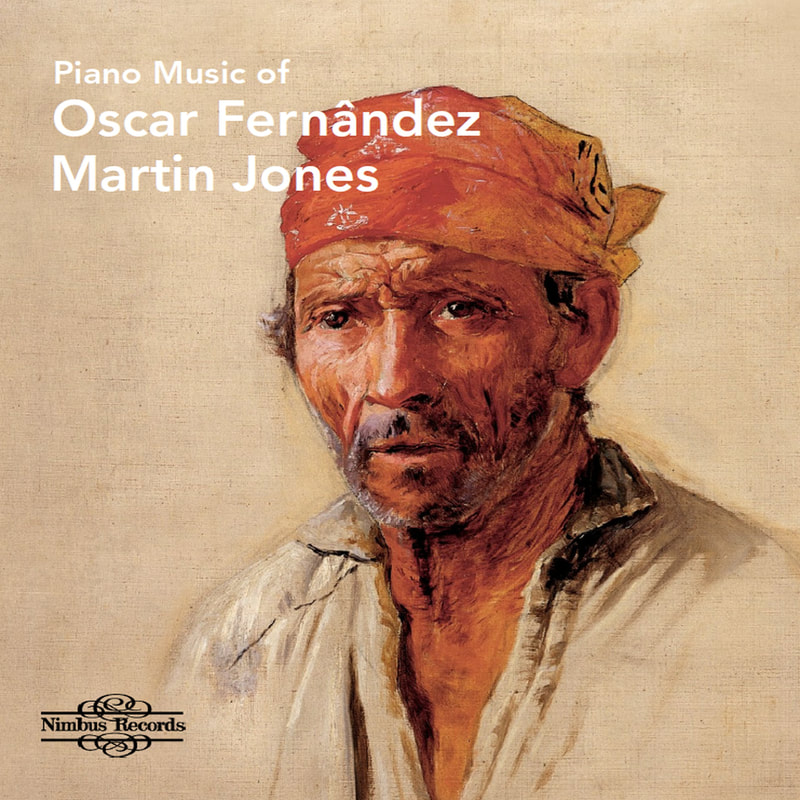
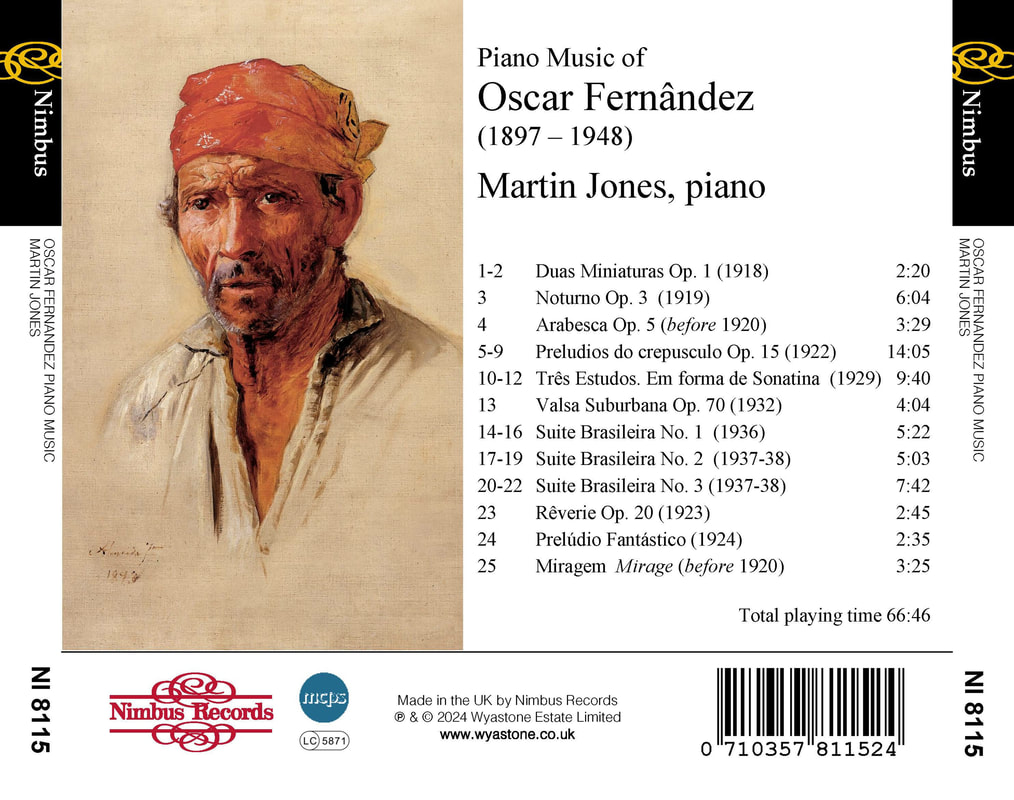
Martin Jones completes his survey of Brazilian pianists with an album of music by Oscar Fernândez, releasing on 5 January 2024 on Nimbus Records (NI.8115).
Picture

Picture

Oscar Lorenzo Fernândez’ (b.1897 - d.1948) work can be divided into three periods, the first (1918-22) is influenced by French Impressionism, the second (1923-38) is marked by the systematic use of folklore, particularly amerindian rhythms and harmonies, rather than ‘popular’ urban melodies. Finally (1939-48) was a period of increasing introspection and the development of a more universally recognised language. ©Adrian Farmer

Aged 18, Fernandez composed his first opera Rainha Moura, based on a popular Spanish novel of the 19th century. Initially his parents didn’t support his inclination towards music, but after an unexpected nervous collapse where he spent his recovery at home playing piano, he gained their approval in 1917 and he enrolled at the National Institute of Music.
In 1920 he gave his first concert where he performed Arabesca and Miragem and in 1922 Arabesca and Nocturnal were awarded prizes at the International Competition of the Society of Musical Culture in Rio de Janeiro (ICSM).

In the early 1930s the President of Brazil asked Luciano Gallet and Mário de Andrade to formulate a program to reform the official teaching of music. They were asked to ‘rescue’ Brazilian culture. Fernandez helped do this and it can be seen within his opera Malazarte which premiered in 1941. Fernandez wrote of the influences of national folklore and modernist language in his opera “I’ve done something very different from what has been done so far here. A Brazilian thing, very Brazilian. But of a well-understood Brazilianness, of course. For me, Brazilianism is the intimate meaning that every work of ours must have, this quality of being born from our land.” (Lorenzo Fernandez. In: Aquarone, Francisco. History of Brazilian music. Rio de Janeiro: Francisco Alves, 1944).


Electronic press kit available from Ulysses Arts.

Digital links will be published here.


0 Comments

Vladimir Feltsman, Schubert Volume 7: Double Album of Impromptus Releases on 5 January 2024, by Nimbus Alliance

10/11/2023

0 Comments

 
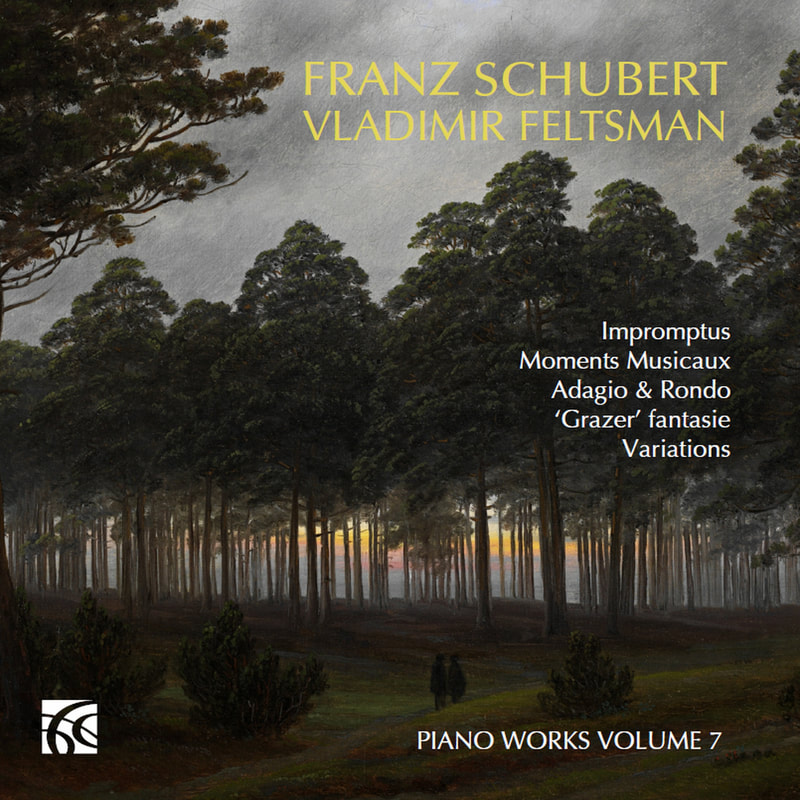
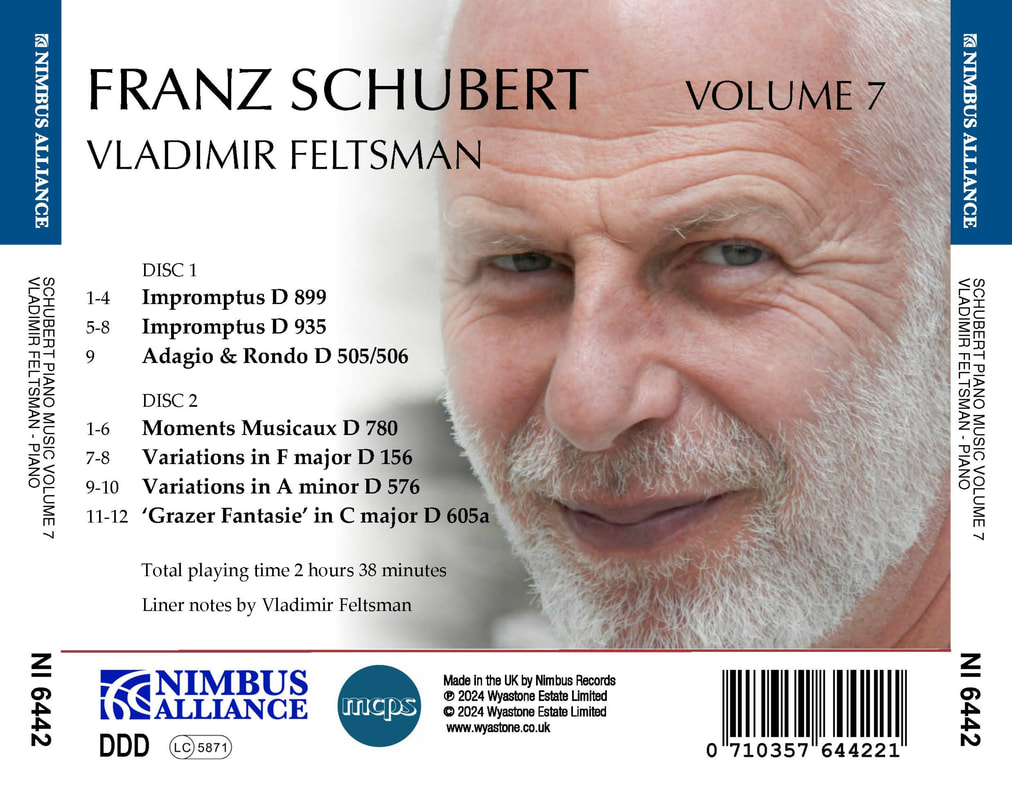
Nimbus Alliance releases Vladimir Feltsman's Schubert Volume 7 double album of the Impromptus, completing his survey of Schubert's piano music, releases on 5 January 2024 (NI.6442).
Picture
Picture
Vladimir Feltsman writes, 'In Schubert’s music he is able to reconcile his innermost longings with the realities of life, to overcome the fear of death and restore the “lost paradise” of innocence and beauty. Very few artists have expressed their inner world, their vision of heaven, with such lucidity and conviction. Schubert composed an incredible amount of music during the last year of his life, as if knowing that he was running out of time. These works represent the pinnacle of his creativity, summing up his exploration of different musical forms, genres, and manner of writing. Among his finest compositions from this period are two sets of Impromptus and the Musical Moments that are included in this recording.'
 
Also available by Vladimir Feltsman: Franz Schubert Piano Works Volumes 1-6.


Picture
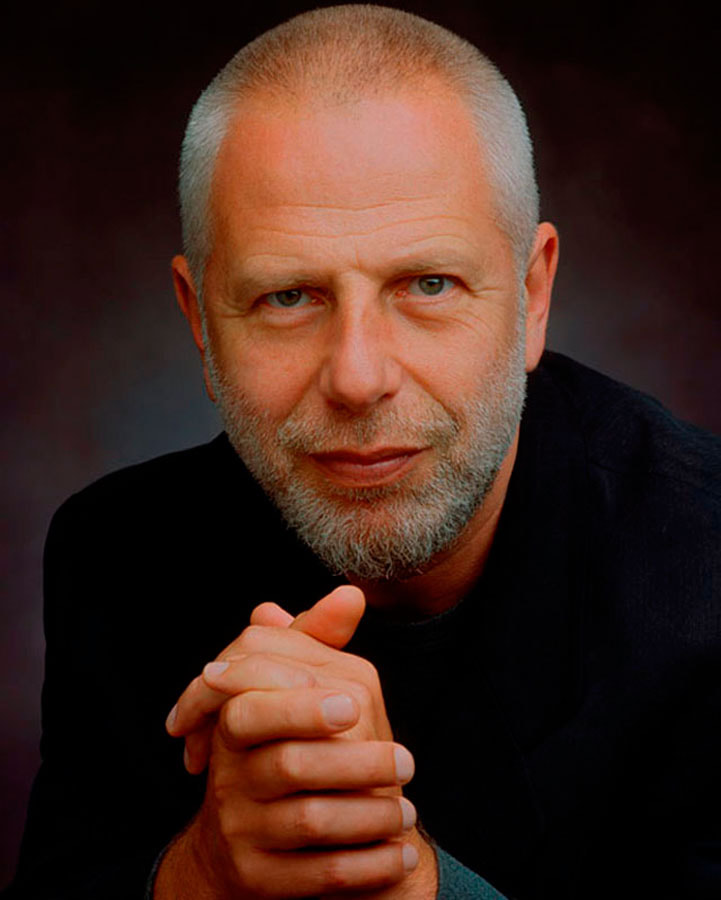
Pianist and conductor Vladimir Feltsman is one of the most versatile and constantly interesting musicians of our time. His vast repertoire encompasses music from the Baroque to 20th-Century composers. A regular guest soloist with leading symphony orchestras in the United States and elsewhere, he appears in the most prestigious concert series and music festivals all over the world. Born in Moscow in 1952, Mr Feltsman gave his debut with the Moscow Philharmonic aged eleven. In 1969, he entered Moscow's Tchaikovsky State Conservatory of Music to study piano under the guidance of Professor Jacob Flier. His Carnegie Hall debit established him as a major pianist on the American and international scene.

A dedicated educator of young musicians, Mr Feltsman holds the Distinguished Chair of Professor of Piano at the State University of New York, New Paltz, and is a member of the piano faculty at the Mannes College of Music in New York City
.


Nimbus Alliance UPC 0710357644221. Duration: 2 hours 38 minutes. Number of CDs: 2
Electronic press kit and review listening links available from Ulysses Arts.

0 Comments

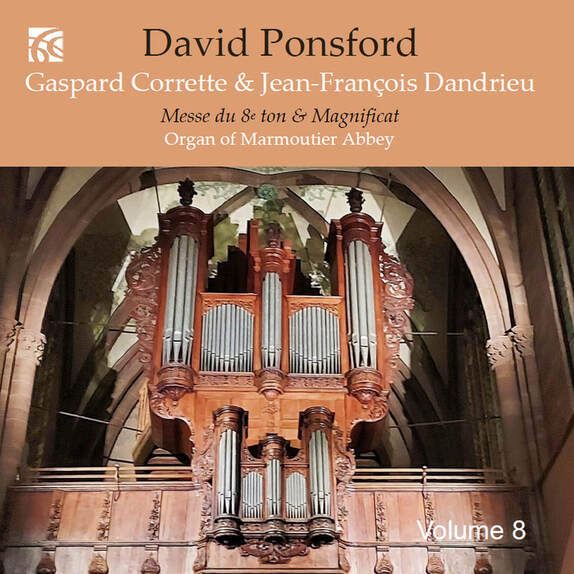
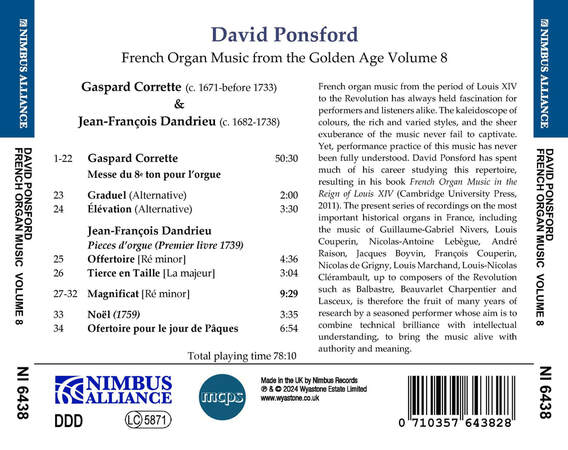
David Ponsford French Organ Music From The Golden Age, Volume 8:  From the time of Louis XIV releases on 5 January 2024 (NI.6438)

10/11/2023

0 Comments

 
Nimbus Records releases the eigth vulme of David Ponsford's French Organ Music From The Golden Age on 5 January 2024, to accompany the book he published under the same title.

David Ponsford is an organist, harpsichordist, musicologist and conductor, and an authority on keyboard music of the seventeenth and eighteenth centuries. He was extremely fortunate to be able to study organ with Peter Hurford, Lionel Rogg and Piet Kee, and harpsichord with Kenneth Gilbert and Gustav Leonhardt. Since 2021, he has taught organ and harpsichord & organ continuo at the Royal Academy of Music, London. The present release is Volume 8 in the series ‘French Organ Music from the Golden Age’, performed by David Ponsford on French historic organs.

Gaspard Corrette (c.1671 – before 1733)
Corrette become organist of the parish church of Saint-Herbland, whose organ rivalled that of the cathedral in scope and size. Corrette’s Messe du 8ℯ ton pour l’orgue was his only publication and pieces like Concert pour les flȗtes and Dessus de tierce par accords vouch for the influence of Boyvin (a French Baroque composer b.1649 - d.1706) upon Corrette.


This eight-volume series emerged from David Ponsford's seminal book French Organ Music in the Reign of Louis XIV (Cambridge University Press, ISBN: 9781316620748)

'This book is a must-have for any serious organist.' Choir and Organ
'Invaluable to understanding and appreciating its subject.' Early Music


Picture
Picture
The Organ of Marmoutier Abbey

At the beginning of the 18th century a more modern version of the Organ became fashionable in Paris. This new instrument was intended to accompany the liturgy, but was also part of the movement of de-Germanisation at Marmoutier following a conflict between nationalities among the abbey’s clergy.

The organ's construction began in 1709 by Andreas Silbermann. Unfortunately, he was stabbed by a cabinet-maker whom he had dismissed. He did not return till 1710, and died in 1734. Only in 1745 was Johann Andreas was comissioned to complete the organ.


Also available from this collection

Volume 1 – NI6213
Volume 2 – NI6225
Volume 3 – NI6268
Volume 4 – NI6292

Electronic press kit available from Ulysses Arts.
Digital download and streaming links will be published here.


0 Comments

    UA Press Centre

    New recordings, press releases, media resources, music industry comment and more from Ulysses Arts.
    Archives

    October 2025
    September 2025
    August 2025
    July 2025
    April 2025
    March 2025
    February 2025
    January 2025
    December 2024
    November 2024
    October 2024
    September 2024
    August 2024
    July 2024
    June 2024
    May 2024
    April 2024
    February 2024
    January 2024
    November 2023
    October 2023
    September 2023
    August 2023
    July 2023
    June 2023
    May 2023
    April 2023
    February 2023
    January 2023
    December 2022
    November 2022
    October 2022
    September 2022
    August 2022
    July 2022
    June 2022
    May 2022
    April 2022
    March 2022
    February 2022
    January 2022
    December 2021
    November 2021
    September 2021
    May 2021
    April 2021
    March 2021
    January 2021
    December 2020
    November 2020
    October 2020
    September 2020
    August 2020
    July 2020
    June 2020
    May 2020
    April 2020
    January 2020
    October 2019
    April 2019
    June 2018
    September 2017
    August 2016
    June 2015
    May 2015
    April 2015
    March 2015
    October 2014

    Categories

    All
    Ablaze Records
    Apple
    Baroque Music
    BBC
    Brass
    British Music
    Chamber Music
    Choral
    Classical
    Colorado MahlerFest
    Concerts
    Contemporary
    CRD Records
    Early Music
    Education
    English Symphony Orchestra
    Fugue State Records
    High Resolution Audio
    IDAGIO
    Ireland
    ITunes
    Live Recordings
    Luminate Records
    Lyrita Records
    Music Books
    New Releases
    Nimbus Records
    Opera
    Orchestral
    Orchestre De Paris
    Organ
    Piano Music
    Platoon
    Sacha Puttnam
    Spotify
    Streaming
    String Orchestra
    TIDAL
    Turkey
    Violin Music
    Vocal


Our Services

Label Services
Digital Distribution
Press and PR
Digital Marketing
Due Diligence
Artistic Programming
Venue Strategy

Sitemap

Home
About
What We Do
Clients
Contact
Blog


Contact Us

Email Ulysses Arts
Registered Office: 170, Finchley Road
London NW3 6BP

Copyright 2023 Ulysses Arts Ltd. 
Website by Kenyon Arts